|
Getting your Trinity Audio player ready... |
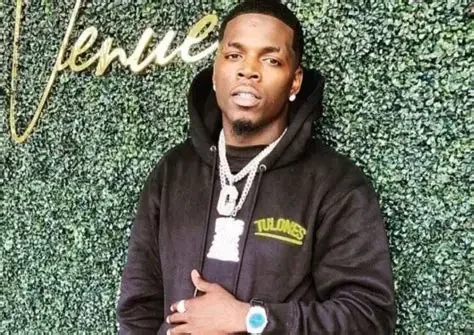
Big Boogie Biography : A Comprehensive Biography of the Memphis Rapper Turning Struggle Into Sound
There’s a particular kind of Memphis rap that doesn’t try to dress itself up. It doesn’t chase a hook for the sake of a hook. It just tells you what happened. Big Boogie belongs to that tradition, and if you spend any real time with his catalog, you start to understand why so many fans describe him less as an entertainer and more as someone giving testimony. This is a full look at who he is, where he came from, and how he built a career out of honesty when honesty wasn’t easy to sell.
Early Life
Big Boogie was born John Lotts on November 4, 1996, in Tallulah, Louisiana. His family relocated to the Frayser neighborhood of Memphis, Tennessee, while he was still young, and it’s Memphis that ultimately shaped the sound people now associate with him. Frayser is not a neighborhood that hands anyone an easy path, and Lotts has never pretended otherwise in his music or in interviews.
One of the defining moments of his youth came in the tenth grade, when his father died. According to Boogie, he was on the phone with his father at the time it happened, an experience he has described as reshaping how he thought about both mortality and music. In early 2019, he wrote a song dedicated to his father, though he has said it remains unreleased, something he’s held onto rather than put out into the world.
He grew up alongside several siblings, including two sisters, Alex McKinley and Joanna, and a brother named Brandon Webber. Family, even when it isn’t front and center in interviews, comes up often in the way he frames his motivation. Formal education took a back seat once the weight of his circumstances became clear. That’s a familiar story for artists coming out of similarly difficult environments, but the specifics of Boogie’s version, the loss, the neighborhood, the responsibility that landed on him early, give his music its particular gravity.
Musical Beginnings
Boogie’s first real exposure to music wasn’t through rap at all. He started playing drums in his high school band, and that early relationship with rhythm eventually pulled him toward writing and performing his own material. By 2016, he had begun releasing independent projects and building a local following around Memphis, working the way most artists from that scene do, one track and one show at a time, without any guarantee that a bigger stage was coming.
His earliest formal release was the mixtape Definition of Pain in 2017, a project that leaned fully into the rawness that would become his signature. That same year he followed it with the Pain on Paper series, and later Final Chapter, both of which helped him build a name inside Memphis before the rest of the industry had caught on. These early tapes weren’t polished in the way major label releases tend to be, but they carried something that mattered more at that stage of a career: a distinct, recognizable voice.
The Road to CMG
Every Memphis rapper of Boogie’s generation understands the significance of Yo Gotti. Gotti’s Collective Music Group has served as a launching pad for artists like Moneybagg Yo, GloRilla, EST Gee, and 42 Dugg, and getting Gotti’s attention has long been one of the clearest paths out of the local circuit and into national relevance.
Boogie’s opportunity came through Gotti’s annual Birthday Bash concert at FedExForum in Memphis. He performed at the event in 2018 and again in 2019, gaining live experience and, more importantly, catching the eye of the man running the show. That attention translated into a signing with CMG, a partnership that gave Boogie access to distribution, promotional infrastructure, and a bigger platform than any independent release could offer on its own.
The signing coincided with the release of his mixtape Final Nightmare in December 2020, a project that featured guest appearances from Gotti himself, along with Moneybagg Yo and Dej Loaf. It marked the clearest signal yet that Boogie had moved from promising local talent to a genuine part of CMG’s roster.
Breakthrough
If there’s a single moment most people point to as Boogie’s turning point, it’s the release of his 2021 album Underrated. The title doubled as a statement of intent, and the project delivered on it, expanding his reach well past Memphis and pulling in listeners who had never encountered his earlier tapes. His viral single “Life Story” is often cited as the track that pulled casual listeners in and got them digging through the rest of his catalog.
From there, Boogie kept a steady release schedule rather than disappearing after a single hit, which is often the more difficult and more telling path for an artist to take. Definition of Big Dude followed in 2023. In 2024 he released REDRUM Wizard, a Gangsta Grillz project done in partnership with the legendary DJ Drama, along with the album Ether, which included the singles “Wop Wop” and “Pool Party.” In 2025 he put out Take Her Down, along with the collaborative single “Let’s Go Dumb Crasy” alongside Earth, Wind & Fire and Big Money Blitz, a pairing that showed a willingness to stretch outside his usual lane.
Collaborations and Sound
Boogie’s sound sits squarely inside the Southern hip hop and Memphis rap traditions, built on hard, direct delivery and production that leans dark and atmospheric rather than radio friendly. Over the years he has worked with a wide range of artists, including GloRilla, Lola Brooke, 42 Dugg, Bankroll Jizzle, YTB Fatt, and DJ Drama, along with his CMG labelmates. These collaborations have done more than expand his reach numerically. They’ve placed him inside a broader conversation about where Memphis rap is heading in this decade, alongside artists who are similarly rooted in the city’s specific style but pushing outward into wider recognition.
Personal Life
Boogie has always kept the personal side of his life at a distance from the public eye, which is a deliberate contrast to how open he is inside his lyrics. He is a father. His daughter, Raya Joi Lotts, was born in December 2019, and fatherhood has become part of how he talks about long term motivation, even if he doesn’t dwell on it publicly in great detail. Reporting has linked him romantically to Reaune, herself an artist, though as with most of his personal life, Boogie has not turned this into public content the way many of his peers do.
The Memphis Rapper Who Turned Pain Into a Catalog
There’s a particular kind of Memphis rap that doesn’t try to dress itself up. It doesn’t chase a hook for the sake of a hook. It just tells you what happened. Big Boogie belongs to that tradition, and if you spend any time with his music, you start to understand why fans describe him less as an entertainer and more as someone giving testimony.
Where He Started
Big Boogie was born John Lotts on November 4, 1996, in Tallulah, Louisiana. His family later relocated to the Frayser neighborhood of Memphis, Tennessee, while he was still a teenager, and it’s Memphis that shaped the sound people now associate with him. Frayser wasn’t an easy place to come up, and Lotts has never pretended otherwise. In interviews he’s talked about losing his father during a phone call while he was in the tenth grade, a moment that reshaped how he thought about music and about time. He began writing not as a career move but as a way of processing what was happening around him.
Formal schooling took a back seat once the reality of his circumstances set in. That’s a common story among artists from similarly hard backgrounds, but Boogie’s version has its own weight to it. He has siblings, including sisters named Alex McKinley and Joanna and a brother named Brandon Webber, and family shows up often in the way he talks about why he keeps working.
Building It From the Ground Up
Boogie didn’t arrive with a shortcut. He released his debut mixtape, Definition of Pain, in 2017, followed that same year by the Pain on Paper series. These were self-driven projects built on raw delivery rather than industry polish, and they slowly built him a following inside Memphis before anyone outside the city was paying attention.
The turning point came through Yo Gotti. Boogie performed at Gotti’s annual birthday celebration in Memphis and caught the ear of a man who has built an entire ecosystem out of finding Memphis talent and giving it a real platform. Gotti brought him into Collective Music Group, the label already home to artists like Moneybagg Yo and GloRilla, and the signing gave Boogie something independent mixtapes alone couldn’t: distribution, structure, and a bigger stage.
The Breakthrough
His viral single “Life Story” is widely credited as the moment casual listeners started paying attention, and the momentum carried into his 2021 album Underrated, a project that did exactly what its title suggested it would do. It forced people to stop sleeping on him. Songs like “Pop Out” and “Mental Healing” followed, each one leaning into the same emotional honesty that defined his earliest work, just with a sharper studio behind it.
What separates Boogie from a lot of artists chasing a similar lane is that he hasn’t sanded down the edges. The subject matter stayed rooted in real experience even as the production got bigger.
Family and Private Life
Boogie keeps most of his personal life away from cameras, which is a deliberate choice for someone whose music is otherwise so confessional. What is known is that he has a daughter, Raya Joi Lotts, born in December 2019, and that fatherhood has become part of how he talks about his motivation going forward. Beyond that, he tends to let the music speak and leaves the rest alone.
Where Things Stand Now
Boogie is still, by most reasonable measures, in the earlier chapters of a career that looks built to last. He has avoided the trap of chasing a single viral moment and instead built an actual catalog, tape after tape and album after album, which tends to be the slower but more durable way to build a lasting name in hip hop. His continued work with CMG, distributed through Interscope, gives him infrastructure that most independent artists never get access to, and his growing list of collaborators outside of Memphis suggests a deliberate effort to widen his footprint without losing what made people pay attention to him in the first place.
If there’s a throughline to his story, it’s that none of it was handed to him. The mixtapes, the label deal, the growing fanbase, all of it traces back to a kid in Frayser who started writing because he needed somewhere to put what he couldn’t say out loud any other way. That’s usually the kind of foundation that has real room left to grow.
Frequently Asked Questions
What is Big Boogie’s real name?
His real name is John Lotts.
Where is Big Boogie from?
He was born in Tallulah, Louisiana, and raised in the Frayser neighborhood of Memphis, Tennessee.
When was Big Boogie born?
He was born on November 4, 1996.
What record label is Big Boogie signed to?
He is signed to Collective Music Group, the label founded by Yo Gotti, which is distributed through Interscope Records.
How did Big Boogie get signed to CMG?
He built a local following in Memphis through independent mixtapes, then performed at Yo Gotti’s annual Birthday Bash concert at FedExForum in both 2018 and 2019, which led to his signing.
What was Big Boogie’s first project?
His debut mixtape was Definition of Pain, released in 2017, followed later that year by the Pain on Paper series.
What is Big Boogie’s breakthrough project?
His 2021 album Underrated is widely considered his breakthrough, helped along by the viral success of his single “Life Story.”
What are Big Boogie’s most notable releases?
Beyond Underrated, his catalog includes Final Nightmare, Definition of Big Dude, REDRUM Wizard with DJ Drama, Ether, and Take Her Down.
Does Big Boogie have children?
Yes. He has a daughter named Raya Joi Lotts, born in December 2019.
Who has Big Boogie collaborated with?
He has worked with artists including GloRilla, Lola Brooke, 42 Dugg, Bankroll Jizzle, YTB Fatt, DJ Drama, and fellow CMG artists such as Moneybagg Yo.
What kind of music does Big Boogie make?
He works within Southern hip hop and Memphis rap, known for raw, direct lyricism paired with dark, atmospheric production rather than a radio friendly sound.