|
Getting your Trinity Audio player ready... |
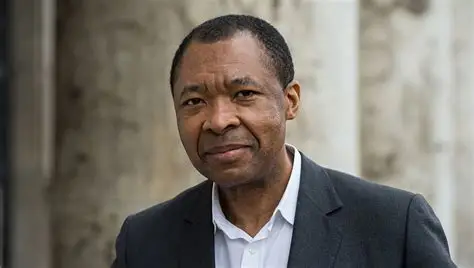
Okwui Enwezor was a Nigerian-born curator, writer, art critic and educator who became a major figure in international contemporary art. Born in Calabar, Nigeria, on October 23, 1963, he built a career across Africa, Europe and the United States.
Enwezor became the first non-European artistic director of Documenta and later directed the 56th Venice Biennale in 2015. His exhibitions brought African and other underrepresented artistic perspectives into major international discussions about modern and contemporary art.
He also founded Nka: Journal of Contemporary African Art and directed Munich’s Haus der Kunst. Through these roles, he combined art with questions about colonialism, migration, politics, history and globalisation.
Early Life and Family Background
Okwui Enwezor was born on October 23, 1963, in Calabar, Nigeria. His family was Igbo and had roots in Awkuzu in present-day Anambra State.
His childhood unfolded during a difficult period in Nigerian history. The Nigerian Civil War began in 1967, when Enwezor was four years old. His family moved during this period, and he later spent part of his formative years in Enugu.
The political and social changes around him provided an early connection to questions of identity, conflict and history. Those subjects later appeared throughout his professional work.
Although Enwezor eventually lived and worked mainly outside Nigeria, Africa remained central to his intellectual interests.
Education and Formative Years
Enwezor began his university education at the University of Nigeria, Nsukka. He later moved to the United States in 1982.
He studied at Jersey City State College, now known as New Jersey City University, and graduated with a bachelor’s degree in political science in 1987.
His political science background influenced the way he approached art. Rather than treating exhibitions as purely aesthetic projects, he often explored political power, historical change, migration and social conditions.
After university, Enwezor became increasingly involved in poetry and contemporary art. This eventually led him toward criticism and curating.
From Poetry to Art Criticism
Enwezor initially worked as a poet in New York. He performed at venues including the Nuyorican Poets Cafe.
His involvement in poetry introduced him to questions about language, culture and representation. He later began writing about contemporary visual art.
During the late 1980s and early 1990s, he worked as an independent critic and curator. Contemporary African art became one of his main interests.
At the time, African artists often received limited attention within major international art institutions. Enwezor sought to address this imbalance through exhibitions, publishing and scholarship.
His approach treated African art as part of contemporary global artistic debate rather than as a separate cultural category.
Founding Nka
In 1994, Enwezor co-founded Nka: Journal of Contemporary African Art. His co-founders were Chika Okeke-Agulu and Salah Hassan.
The journal created a platform for scholarship and criticism concerning contemporary African and African diaspora art. It connected artists, researchers and critics working across different regions.
Nka also helped establish a stronger academic field around contemporary African art. Enwezor’s editorial work complemented his growing reputation as a curator.
His interest in publishing remained important throughout his career. He later produced and edited numerous exhibition catalogues and scholarly publications.
Rise as an International Curator
Enwezor’s international reputation expanded during the 1990s. In 1996, he curated In/Sight: African Photographers, 1940 to the Present at the Solomon R. Guggenheim Museum in New York.
The exhibition presented photography from different parts of Africa across several decades. It challenged narrow views of African photography by placing the work within a broader history of modern and contemporary art.
In 1997, Enwezor became artistic director of the Second Johannesburg Biennale in South Africa. Its theme, Trade Routes: History and Geography, examined relationships created through commerce, migration and global exchange.
The Johannesburg Biennale established him as an important international curator. It also demonstrated his interest in connecting art with wider historical forces.
The Short Century
One of Enwezor’s major projects was The Short Century: Independence and Liberation Movements in Africa, 1945 to 1994.
The exhibition examined African political and cultural developments following the Second World War. It brought together painting, photography, architecture, film and historical documents.
The exhibition opened at the Museum Villa Stuck in Munich in 2001. It later travelled to institutions including the Museum of Contemporary Art in Chicago and the Museum of Modern Art in New York.
The Short Century examined the relationship between African art and the political struggles surrounding independence and liberation. It also showed Enwezor’s ability to construct exhibitions around historical periods rather than individual artistic movements.
Documenta 11
Enwezor reached another major milestone when he was appointed artistic director of Documenta 11 in Kassel, Germany.
Documenta is one of the world’s leading recurring contemporary art exhibitions. Enwezor became its first non-European artistic director.
The exhibition opened in 2002 after a series of platforms held in different cities. These programmes examined issues including democracy, migration, globalisation and urban life.
Documenta 11 included artists from Africa, Asia, Latin America, Europe and other regions. Its structure reflected Enwezor’s interest in moving beyond a Western-centred account of contemporary art.
His appointment also marked a significant moment in the history of major international exhibitions. An African-born curator had taken responsibility for one of Europe’s most influential contemporary art events.
Haus der Kunst and Major Exhibitions
Enwezor continued to lead important international projects after Documenta.
He served as artistic director of the Seville Biennial, the Gwangju Biennale and the Paris Triennale. He also organised exhibitions examining photography, apartheid, archives and modernism.
In 2011, he became director of Haus der Kunst in Munich. He remained in that position until 2018, when he stepped down because of his health.
One of his major projects there was Postwar: Art Between the Pacific and the Atlantic, 1945 to 1965. The exhibition examined artistic developments across several regions during the period after the Second World War.
His work at Haus der Kunst continued his interest in expanding the geographical framework through which modern art was studied.
Venice Biennale 2015
In 2013, Enwezor was appointed curator of the 56th Venice Biennale. He became the first African-born curator to lead the visual arts exhibition.
The 2015 edition was titled All the World’s Futures. It examined contemporary art alongside issues involving labour, politics, inequality and social change.
The exhibition reflected Enwezor’s preference for art that engaged with major questions facing society. It also brought his international curatorial career to one of its most visible platforms.
His leadership of Venice confirmed his position as one of the most prominent curators working internationally.
Academic Work and Teaching
Enwezor also had a substantial academic career. He taught at institutions including the San Francisco Art Institute, Columbia University, the University of Pittsburgh, the University of Illinois and New York University.
Teaching allowed him to influence students as well as museum audiences. His academic interests included contemporary African art, postcolonial studies, photography, modernism and globalisation.
He also wrote extensively about contemporary art. His books, essays and exhibition catalogues became important contributions to scholarship on African and global art.
Personal Life and Final Years
Enwezor kept much of his private life away from public attention. His professional work remained the main focus of his public career.
He divided his working life between different international art centres, particularly New York and Munich. His career required regular movement between museums, universities, biennials and publishing projects.
In 2018, he left his position at Haus der Kunst because of deteriorating health. He continued working on cultural projects during his final period.
Death
Okwui Enwezor died in Munich, Germany, on March 15, 2019. He was 55 years old.
He had been living with cancer for several years. News of his death brought tributes from major museums, artists, curators and scholars around the world.
His death ended a career that had significantly influenced international exhibition practice and the study of contemporary African art.
Legacy and Historical Significance
Okwui Enwezor’s most important historical contribution was his role in broadening the framework of international contemporary art.
His career demonstrated that African perspectives could shape major global exhibitions at the highest level. His leadership of Documenta 11 and the 2015 Venice Biennale gave this approach institutional visibility.
His work also changed discussions around contemporary African art. Through Nka, The Short Century, exhibitions and academic writing, he helped establish African artists and intellectual debates as important subjects within global contemporary art.
Another important part of his legacy was his use of historical and political context. His exhibitions often connected artworks with colonialism, independence, migration, democracy and global economic change.
This approach influenced how major exhibitions could address history and politics without treating art as separate from society.
Enwezor’s influence therefore rests on more than the number of exhibitions he curated. He helped widen the geographical scope of contemporary art and gave greater institutional weight to perspectives that had often been marginalised.
His writings and teaching extended that contribution beyond museums. They provided ideas that continue to inform scholarship and debate about African and global modernism.
Read More: Bob Marley Biography: Early Life, Career, Family, Death and Legacy
Frequently Asked Questions
Who was Okwui Enwezor?
Okwui Enwezor was a Nigerian-born curator, art critic, writer and educator who became one of the leading figures in international contemporary art.
When was Okwui Enwezor born?
Okwui Enwezor was born on October 23, 1963, in Calabar, Nigeria.
Where did Okwui Enwezor study?
He began his university education at the University of Nigeria, Nsukka. He later studied in the United States and earned a bachelor’s degree in political science from Jersey City State College in 1987.
What was Okwui Enwezor famous for?
He was known for curating major international exhibitions, including Documenta 11 and the 2015 Venice Biennale.
What was Documenta 11?
Documenta 11 was the 2002 edition of the major contemporary art exhibition in Kassel, Germany. Enwezor served as its artistic director.
Was Okwui Enwezor the first African curator of the Venice Biennale?
He was the first African-born curator to lead the Venice Biennale’s visual arts exhibition.
What was Okwui Enwezor’s contribution to African art?
He helped increase the international visibility of contemporary African art through exhibitions, publishing, criticism and academic work.
What was Nka?
Nka: Journal of Contemporary African Art is a publication that Enwezor co-founded in 1994 with Chika Okeke-Agulu and Salah Hassan.
When did Okwui Enwezor die?
Okwui Enwezor died on March 15, 2019, in Munich, Germany.
How old was Okwui Enwezor when he died?
He was 55 years old.
What is Okwui Enwezor remembered for?
He is remembered for expanding the global scope of contemporary art exhibitions and increasing the institutional recognition of African art and scholarship.
Conclusion
Okwui Enwezor built an influential career by connecting contemporary art with history, politics and global culture. From his early work in New York to Documenta, Haus der Kunst and the Venice Biennale, he challenged narrow approaches to international art. His exhibitions, writing and teaching helped establish a broader place for African perspectives within contemporary art. His legacy remains closely tied to the global approach he brought to curating and art scholarship.