|
Getting your Trinity Audio player ready... |
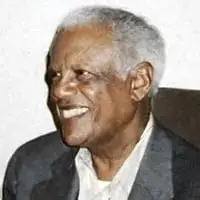
Professor Asmarom Legesse was an Eritrean anthropologist and African intellectual. His scholarship changed international understanding of the Oromo Gadaa system and its role in African political thought.
Born in Asmara in 1931, Legesse built a distinguished academic career in the United States. He taught and conducted research at several leading American universities. Over time, his work focused more closely on African societies, indigenous institutions and traditional systems of governance.
His research on the Oromo people became his most influential contribution. Legesse examined the Gadaa system as a sophisticated form of indigenous African political organization. He showed how its institutions structured leadership, social responsibility, political participation and the peaceful transfer of authority.
His landmark books established his reputation as a leading scholar of Gadaa and African political systems. These works included Gadaa: Three Approaches to the Study of African Society and Oromo Democracy: An Indigenous African Political System.
Through his scholarship, Legesse challenged narrow views of African political history. He demonstrated that African societies developed complex systems of governance long before the spread of modern European political institutions. His work also brought greater international attention to Oromo political traditions and their enduring historical significance.
Legesse died on January 31, 2026, at the age of 94. His death marked the passing of a scholar whose work had crossed anthropology, political science, history and African studies. His intellectual legacy remains closely associated with the effort to document Gadaa as a sophisticated indigenous system of social and political organisation rather than reducing it to folklore or customary practice.
Early Life and Family Background
Asmarom Legesse was born in Asmara, Eritrea, on February 5, 1931, according to biographical accounts published following his death. He was the son of Legesse Araya and Temertsa Yosief and grew up in an extended family environment in Asmara. His early years were shaped by family, education, religion and the intellectual environment of the Eritrean capital.
He attended the Swedish Evangelical Mission School in Asmara, where he received part of his early education. One of his teachers was Woldeab Woldemariam, an important Eritrean educator and nationalist figure. This educational environment exposed Legesse to both formal learning and the wider questions of African society and political identity that would later become important to his intellectual life.
The historical circumstances surrounding his youth were also significant. Eritrea’s political status changed dramatically during the twentieth century, and the Horn of Africa became a region marked by colonial rule, competing national projects and political conflict. Legesse’s later scholarship reflected a deep interest in how African societies developed their own institutions and responded to external political forces.
Education and Formative Years
Legesse pursued higher education in the United States and developed an academic foundation that combined political science and anthropology. Recent biographical accounts identify the University of Wisconsin as part of his educational journey and Harvard University as the institution where he completed his doctoral training in anthropology.
His training in anthropology was especially important because it provided the methodological tools for studying societies through extended field research rather than relying exclusively on written colonial records. This became crucial to his later work among the Oromo.
Legesse’s scholarship sought to understand African institutions on their own terms. Instead of assuming that political systems had to resemble European state structures to qualify as sophisticated forms of governance, he examined indigenous institutions, social organisation, leadership and law as subjects worthy of serious comparative study.
Academic Career
Legesse developed a long academic career in the United States and became associated with several major universities. Sources published after his death identify academic appointments or teaching relationships with institutions including Harvard University, Boston University, Northwestern University, Swarthmore College and the University of Chicago.
His academic work eventually extended beyond anthropology into political thought and African studies. The breadth of his scholarship allowed him to examine the relationship between culture, political organisation, law, history and social institutions.
Although he was an Eritrean scholar, much of his most influential research concerned the Oromo people of Ethiopia and northern Kenya. His intensive study of Oromo society, particularly among the Borana Oromo, became the foundation for his major contributions to the study of Gadaa.
Research on African Societies
Legesse’s approach to African societies differed from interpretations that treated indigenous institutions primarily as remnants of a premodern past. He approached them as complex systems that could be analysed through anthropology, political theory and history.
His research was particularly interested in how communities distributed authority, organised leadership, maintained social order and resolved conflicts. These questions brought him directly to Gadaa, the institution that would become the defining subject of his scholarly career.
Gadaa is a complex Oromo system involving political, social, economic, military, judicial, educational and ritual dimensions. Legesse’s contribution was to document its institutional structure in considerable detail and explain the principles through which authority was organised and transferred.
His research demonstrated that the study of African political systems could not be separated from indigenous concepts of authority, responsibility, age organisation, law and collective decision-making.
Gadaa: Three Approaches to the Study of African Society
Legesse’s first major book on Gadaa was Gadaa: Three Approaches to the Study of African Society, published in 1973. The book developed from his earlier doctoral research and examined the Gadaa system through anthropological, historical and sociopolitical perspectives.
The work was important because it treated Gadaa as a serious political and social institution rather than simply as a collection of customs. Legesse examined age grades, leadership, political responsibilities and the institutional relationships that allowed Oromo society to regulate itself.
His research focused particularly on the Borana Oromo of southern Ethiopia and northern Kenya. Through field research and analysis, he demonstrated the complexity of the institutional system and its relationship to Oromo social life.
The book became a foundational reference for scholars studying Gadaa. Later research on Oromo history and political organisation continued to cite Legesse’s work as a major contribution to understanding the institution.
Oromo Democracy and Indigenous Political Thought
Legesse returned to the subject in his 2000 book, Oromo Democracy: An Indigenous African Political System. Published by the Red Sea Press, the book presented a more developed interpretation of Gadaa as an indigenous African political system.
The book examined the distribution of authority among different institutions and highlighted mechanisms involving leadership rotation, deliberative assemblies, customary law and institutional checks and balances. Legesse argued that Gadaa offered valuable material for thinking about constitutional government and democracy from an African historical perspective.
One of the most important aspects of his argument was that democratic political thought should not be presented as exclusively European in origin. His research demonstrated that Oromo society had developed mechanisms for distributing political responsibility and limiting the concentration of authority long before modern democratic institutions became dominant in Africa.
This did not mean that Gadaa was identical to a modern liberal constitutional state. Rather, Legesse’s scholarship encouraged scholars to recognise its distinctive institutional principles and consider what indigenous African political traditions could contribute to contemporary discussions about governance.
Asmarom Legesse and the Gadaa System
Legesse became internationally identified with the study of Gadaa because of the depth and longevity of his research. He described Gadaa as a system in which different generations assumed political, military, judicial, legislative and ritual responsibilities according to an established cycle.
The system involved more than the selection of leaders. It provided a framework for regulating relationships within Oromo society, including education, socialisation, conflict resolution, political participation and collective responsibility.
Legesse’s scholarship helped move Gadaa from the margins of academic discussion into wider debates about African political thought. His work was particularly significant because it challenged older assumptions that African societies lacked sophisticated traditions of constitutional governance.
The importance of Gadaa also extends beyond academic debate. UNESCO inscribed the Gadaa system on its Representative List of the Intangible Cultural Heritage of Humanity in 2016. Legesse’s scholarship was widely regarded by Oromo scholarly organisations as an important intellectual foundation for the international recognition and documentation of the tradition.
Scholarship, Eritrea and Public Intellectual Work
Although his most famous research concerned Oromo society, Legesse also wrote and spoke about Eritrea and wider political questions in the Horn of Africa. His work reflected his continuing engagement with the political experiences of the region.
Eritrean sources also record his involvement in Eritrean relief and political advocacy. He served as chairman of the United States branch of the Eritrean Relief Association during the years preceding Eritrea’s independence and later produced research and documentation concerning Eritrean experiences during the conflict with Ethiopia.
This aspect of his life illustrates the broader role he played as a public intellectual. He was not confined to the university classroom. He used scholarship to examine questions of identity, political power, historical memory and the treatment of African communities.
His public interventions also attracted criticism and political disagreement, particularly because his scholarship and public positions touched on contentious questions concerning Eritrea and Ethiopia. These debates form part of the historical record of his later career and should be considered alongside, rather than confused with, his anthropological contribution.
Personal Life and Family
Legesse married Bisrat Marikos, who was also known as Gu’oy. Recent biographical accounts state that they had a daughter, Sarah, and that Legesse was also survived by Elizabeth and members of the extended family.
Details of his private life were less prominent in the public record than his academic work. His professional life, however, placed him in sustained contact with students, researchers, cultural organisations and communities connected with Oromo studies.
He was also held in particularly high esteem by many Oromo communities. Some later accounts describe him as having been symbolically recognised as an Abbaa Gadaa, reflecting the respect attached to his work documenting and interpreting Oromo political heritage.
Later Years and Death
Legesse continued to contribute to African intellectual and cultural debates well into old age. His later years were marked by continued interest in Oromo studies, African political thought and the historical experiences of Eritrea.
He remained a reference point for scholars studying Gadaa and indigenous African governance. His books continued to be cited in academic research, while Oromo cultural and scholarly organisations increasingly treated his work as an important part of the intellectual preservation of Gadaa.
Asmarom Legesse died on January 31, 2026, at the age of 94. Reports stated that he died in the United States, while a later funeral was held at Asmara’s Evangelical Lutheran Church Cemetery in Eritrea on February 25, 2026.
The difference between the location of his death and the location of his funeral reflects the transnational nature of his life. He spent much of his career outside Eritrea while remaining deeply connected to the Horn of Africa and its intellectual and political questions.
Legacy and Historical Significance
Asmarom Legesse’s most important legacy is his contribution to the recognition of indigenous African political thought. He ranked among the most influential scholars of indigenous African political institutions. He examined the Gadaa system on its own intellectual terms. His decades of research revealed the complexity of Oromo social and political organisation.
His scholarship challenged simplistic views of African governance. Through his books, teaching and public scholarship, Legesse brought greater attention to Oromo political thought. He also engaged with important questions surrounding Eritrea and the Oromo people.
His influence extended far beyond anthropology. Legesse preserved and explained an important African intellectual tradition. He also helped elevate Gadaa in international academic discussions. His work remains relevant today. Scholars continue to study Gadaa, while Oromo communities continue to practise and debate its principles.
His two major works on Gadaa remain central to this contribution. Gadaa: Three Approaches to the Study of African Society established the detailed anthropological foundation, while Oromo Democracy presented the system in a broader discussion of African constitutional thought.
His work also helped establish Gadaa as a subject of global scholarly interest. Researchers across anthropology, history, political science and African studies continue to engage with the system he documented.
Asmarom Legesse ranked among the most influential scholars of indigenous African political institutions. He examined the Gadaa system on its own intellectual terms. Through decades of research, he revealed the complexity of Oromo social and political organisation.
His scholarship also challenged simplistic views of African governance. Legesse used his books, teaching and public scholarship to bring greater attention to Oromo political thought. He also engaged with important questions concerning Eritrea and the Oromo people.
Historical Significance
His influence reached far beyond anthropology. Legesse preserved and explained an important African intellectual tradition. He also helped elevate Gadaa in international academic discussions. His work remains relevant today. Scholars continue to study the system, while Oromo communities continue to practise and debate its principles.
At the same time, his legacy should not be reduced entirely to Oromo studies. His broader career demonstrated the value of taking African intellectual traditions seriously on their own historical terms. His work encouraged scholars to look beyond colonial descriptions and investigate how African communities themselves organised authority, law, identity and social responsibility.
The recognition of Gadaa as intangible cultural heritage further demonstrates the continuing importance of the tradition he documented. UNESCO’s 2016 inscription did not simply make Gadaa internationally visible. It also underscored the importance of preserving the knowledge, practices and institutions associated with it.
Asmarom Legesse therefore occupies an important place in the history of African scholarship. His enduring contribution was not simply that he wrote about Gadaa. He helped change the questions scholars asked about African political institutions and demonstrated that indigenous African systems deserved to be examined as serious intellectual and constitutional traditions.
Read More: Fantu Cheru Biography: Early Life, Education, Career, Scholarship and Legacy
Conclusion
Asmarom Legesse ranked among the most influential scholars of indigenous African political institutions. He examined the Gadaa system on its own intellectual terms. Through decades of research, he revealed the complexity of Oromo social and political organisation.
His scholarship also challenged simplistic views of African governance. Legesse used his books, teaching and public scholarship to bring greater attention to Oromo political thought. He also engaged with important questions concerning Eritrea and the Oromo people.
His influence reached far beyond anthropology. Legesse preserved and explained an important African intellectual tradition. He also helped elevate Gadaa in international academic discussions. His work remains relevant today. Scholars continue to study the system, while Oromo communities continue to practise and debate its principles.