|
Getting your Trinity Audio player ready... |
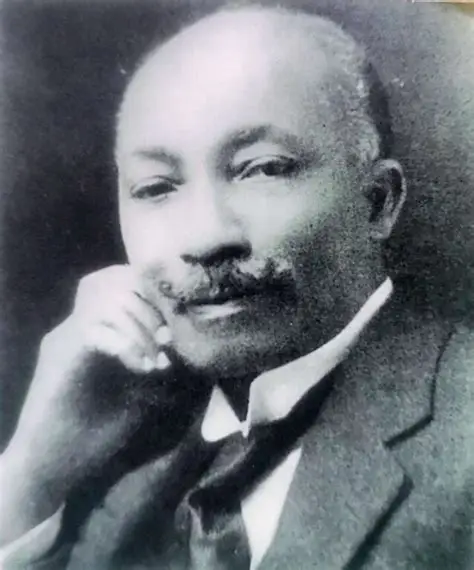
Joseph Ephraim Casely Hayford (1866–1930) was a Gold Coast lawyer, journalist, author and nationalist who helped shape early African political thought in West Africa. He campaigned against colonial policies that threatened African land rights, promoted education and political representation, and encouraged cooperation among British West African territories.
Hayford believed Africans should participate directly in governing their societies and protecting their cultural institutions. His political activities extended beyond the Gold Coast, now Ghana, and helped establish an important foundation for regional African nationalism. Through his journalism, books and political organisations, he became one of the influential intellectual figures of his generation.
Early Life and Education
Casely Hayford was born on September 29, 1866, in Cape Coast, in the Gold Coast. His birth name was Ekra Agyiman. He came from a prominent Fante Christian family. His father, Joseph de Graft Hayford, was a Methodist minister and an advocate of education.
Hayford attended the Wesleyan Boys’ High School in Cape Coast, where he developed an interest in literature, public affairs and education. He later enrolled at Fourah Bay College in Freetown, Sierra Leone, one of West Africa’s leading institutions of higher learning at the time.
At Fourah Bay College, he encountered African intellectual debates about race, culture, education and political freedom. The ideas of Edward Wilmot Blyden, a prominent West African thinker, influenced his understanding of African identity and intellectual development.
After returning to the Gold Coast, Hayford worked as a teacher and became principal of the Wesleyan High School. His career in education introduced him to the challenges facing African institutions under colonial administration. He eventually left teaching and pursued journalism and law.
In 1893, he travelled to England for further studies. He attended Peterhouse, Cambridge, and studied law at the Inner Temple. He was called to the English Bar in 1896 before returning to the Gold Coast to practise law.
Journalism and the Defence of African Rights
Hayford used journalism to discuss colonial policies and defend African interests. He worked for The Western Echo, a newspaper associated with his uncle, before becoming its editor. He later renamed it The Gold Coast Chronicle.
Through his writing, he challenged colonial decisions that threatened African land ownership, traditional institutions and political participation. He believed that African communities had established systems of landholding and governance that deserved legal recognition.
The land question became one of the central concerns of his political career. British colonial authorities considered legislation that could increase government control over African lands. Hayford opposed these proposals because he believed they threatened customary ownership and the economic independence of local communities.
In 1911, he published The Truth About the West African Land Question, a work that presented his arguments against colonial interference in African land arrangements. His legal background helped him explain the issue in constitutional and administrative terms.
Hayford also supported African education and the preservation of indigenous institutions. He argued that colonial governments should consult African leaders rather than impose policies without considering local customs and interests.
Political Activism and the Aborigines’ Rights Protection Society
Hayford became a leading member of the Aborigines’ Rights Protection Society (ARPS), an organisation established in the Gold Coast to defend African land rights and oppose discriminatory colonial legislation.
He became its president in 1910. Under his leadership, the organisation continued its campaign against colonial land policies and demanded greater African participation in decisions affecting local communities.
In 1911, Hayford travelled to Britain as part of efforts to oppose proposed land legislation. The delegation presented African concerns to British authorities and sought to protect customary landholding arrangements.
His approach relied mainly on legal arguments, petitions, public debate and organised representation. He believed Africans could use political institutions and constitutional pressure to challenge colonial decisions.
In 1916, Hayford entered the Gold Coast Legislative Council. His position gave him an opportunity to raise African concerns within the colonial government’s political structure. He continued advocating reforms that would improve African representation and protect local interests.
The National Congress of British West Africa
Hayford’s political vision extended beyond the Gold Coast. He believed that Africans in British West African territories faced related problems and could achieve greater influence through regional cooperation.
In 1920, he helped establish the National Congress of British West Africa (NCBWA). The organisation brought together educated African leaders and professionals from the Gold Coast, Nigeria, Sierra Leone and the Gambia.
The Congress sought constitutional reforms, greater African representation in legislative councils, improved education and stronger African participation in public administration. It also promoted cooperation among West African communities facing similar colonial restrictions.
In 1920, Hayford led a delegation to London to present the Congress’s demands to the British government. The delegation sought political reforms and greater opportunities for Africans to participate in governing their territories.
Although the Congress did not achieve all its objectives, it created an important platform for regional political discussion. Its activities helped establish the idea that West Africans could pursue common political interests across colonial boundaries.
Literary Career and Pan-African Ideas
Hayford’s contribution extended beyond journalism and politics. He was also a novelist whose writing explored African identity, cultural dignity and racial emancipation.
His best-known novel, Ethiopia Unbound: Studies in Race Emancipation, appeared in 1911. The work is widely recognised as one of the earliest novels written in English by an African. It explores questions of race, education, Christianity, African civilisation and the intellectual independence of Black people.
The novel reflected Hayford’s belief that Africans should participate in modern intellectual life without abandoning their cultural heritage. It also connected his Gold Coast political concerns with wider Pan-African debates about racial equality and self-determination.
Hayford maintained connections with prominent African and African diaspora intellectuals, including W.E.B. Du Bois and Booker T. Washington. These relationships placed his work within a wider network of discussions about education, racial discrimination and African political advancement.
His writing and political activities helped establish him as an important early advocate of African nationalism, although his political programme generally favoured constitutional reform and cooperation rather than immediate independence.
Death and Legacy
Joseph Ephraim Casely Hayford died on August 11, 1930, in the Gold Coast, aged 63. His death came during a period when African political organisations were increasingly demanding changes to colonial government.
His legacy rests on his contribution to journalism, literature, legal advocacy and political organisation. Through the Aborigines’ Rights Protection Society, he helped defend African land rights. Through the National Congress of British West Africa, he promoted regional cooperation and constitutional reform.
His novel Ethiopia Unbound also became an important work in African literary history. It expressed the intellectual confidence that underpinned later movements for African cultural and political independence.
Hayford did not lead a campaign for immediate national independence. His methods focused on representation, constitutional reform and the protection of African institutions. Nevertheless, his arguments helped develop the political ideas that later generations expanded during the struggle for independence.
Conclusion
Joseph Ephraim Casely Hayford was a major figure in early West African nationalism. As a lawyer, journalist, author and political organiser, he challenged colonial interference in African affairs and promoted regional cooperation. His work on land rights, education, political representation and African identity helped shape the intellectual foundations of later independence movements in Ghana and West Africa.
Frequently Asked Questions
Who was Joseph Ephraim Casely Hayford?
Joseph Ephraim Casely Hayford was a Gold Coast lawyer, journalist, novelist and nationalist who campaigned for African rights and political representation during British colonial rule.
What was Casely Hayford’s most famous book?
His best-known book was Ethiopia Unbound: Studies in Race Emancipation, published in 1911. It explored African identity, racial equality and cultural independence.
What was the National Congress of British West Africa?
The National Congress of British West Africa was a regional political organisation established in 1920. It brought together African leaders from the Gold Coast, Nigeria, Sierra Leone and the Gambia to demand constitutional reforms and greater political representation.
What did Casely Hayford do for African land rights?
He opposed colonial land legislation that threatened customary African ownership. He also led the Aborigines’ Rights Protection Society and helped present African concerns to British authorities.
When did Joseph Ephraim Casely Hayford die?
He died on August 11, 1930, aged 63.