|
Getting your Trinity Audio player ready... |
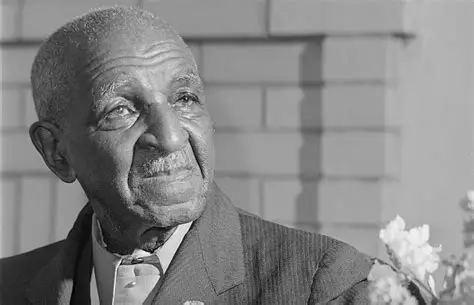
George Washington Carver was an American agricultural scientist, educator and inventor who helped improve farming practices in the southern United States. Born into slavery during the American Civil War, he became a respected researcher and teacher at Tuskegee Institute in Alabama. His work promoted crop rotation, soil conservation and the cultivation of crops beyond cotton. He also developed numerous uses for peanuts, sweet potatoes and other agricultural products.
Carver devoted much of his career to helping African American farmers improve their livelihoods through practical agricultural education. His research connected scientific discovery with the everyday needs of rural communities.
Early Life and Background
George Washington Carver was born into slavery around 1864 near Diamond Grove in Newton County, Missouri. His exact birth date remains uncertain. His parents, Mary and Giles, were enslaved, and his father died before his birth.
When Carver was an infant, raiders abducted him and his mother from the farm where they lived. Moses Carver, the farm’s owner, arranged a search. The rescuers found George, but they never recovered his mother. Moses and Susan Carver raised George and his older brother, Jim, after slavery ended.
Carver suffered from poor health during childhood. He could not always perform heavy farm labour, so he spent considerable time studying plants and observing nature. His curiosity developed into a lasting interest in botany and agriculture.
He became known locally for his ability to nurse sick plants back to health. People sometimes called him the “plant doctor.” This early experience helped shape his interest in scientific farming and plant research.
Education and the Search for Knowledge
Carver left the farm as a child to pursue an education. He attended a school for Black children in Neosho, Missouri, and later travelled through Kansas in search of further opportunities.
His education involved significant hardship. Racial discrimination restricted access to schools and colleges, while limited finances forced him to support himself through different jobs. In 1885, Highland College in Kansas initially accepted him but withdrew the offer after learning that he was Black.
Carver continued studying independently and eventually enrolled at Simpson College in Indianola, Iowa, in 1890. He initially studied art and music. His talent for painting plants and flowers attracted the attention of his teacher, Etta Budd, who encouraged him to pursue botany.
He transferred to Iowa State Agricultural College, now Iowa State University, in 1891. There, he studied agricultural science and developed his research skills. He earned a bachelor’s degree in 1894 and a master’s degree in 1896.
Carver became the institution’s first Black student and later its first Black faculty member. His achievements opened a path into scientific research that racial barriers had made difficult to access.
Career at Tuskegee Institute
In 1896, Booker T. Washington invited Carver to lead the agricultural department at Tuskegee Institute in Alabama. Washington wanted the institution to provide practical education that could improve the lives of African Americans.
Carver accepted the position and remained at Tuskegee for the rest of his life. He taught students, conducted experiments and developed agricultural programmes for rural communities.
He focused on the problems facing farmers in the South. Many depended heavily on cotton, a crop that depleted soil nutrients when farmers grew it repeatedly without suitable rotation or soil management. This dependence also exposed farmers to economic hardship when cotton prices fell.
Carver promoted alternative crops such as peanuts, sweet potatoes and soybeans. He explained how crop rotation could improve soil fertility and help farmers reduce their dependence on cotton. His work offered practical methods that farmers could adapt to their own land and resources.
Agricultural Research and Crop Diversification
Carver’s agricultural research aimed to make farming more productive and sustainable. He encouraged farmers to alternate cotton with crops that could help restore soil nutrients. Legumes such as peanuts and soybeans played an important role because they support nitrogen fixation through their relationship with soil bacteria.
Carver also promoted better soil management, natural fertilisers and the careful use of available resources. He wanted farmers to understand why particular methods worked, rather than simply follow instructions.
His research extended beyond field cultivation. Carver investigated ways to turn crops into useful food, household and industrial products. He developed numerous applications for peanuts, sweet potatoes, pecans and other plants.
His experiments produced products and methods involving foods, dyes, paints, oils, soaps and other materials. These investigations attracted public attention and helped demonstrate the commercial potential of crops that farmers had previously overlooked.
However, Carver’s lasting contribution was broader than the number of products he developed. He helped popularise crop diversification and practical agricultural education. He also encouraged farmers to connect soil health, food production and economic security.
The Jesup Wagon and Agricultural Education
Carver believed scientific knowledge should reach farmers who could not attend Tuskegee. In 1906, he helped develop the Jesup Agricultural Wagon with Thomas Monroe Campbell. The project brought demonstrations and agricultural information directly to rural communities.
The wagon carried equipment and educational materials that showed farmers practical techniques. Demonstrations covered subjects such as crop rotation, soil improvement, food preparation and household management.
Carver also prepared simple agricultural bulletins. These publications explained his research in accessible language and helped farmers apply new methods without needing advanced scientific training.
This approach became an important part of agricultural extension work. Instead of limiting research to laboratories and classrooms, Carver helped bring scientific education into the communities it was intended to serve.
Recognition and Public Influence
Carver gained national attention for his research and advocacy of alternative crops. In 1921, he appeared before a committee of the United States House of Representatives to discuss the peanut industry. His presentation helped strengthen public recognition of peanuts as a valuable agricultural commodity.
In 1923, the National Association for the Advancement of Colored People awarded him the Spingarn Medal for his achievements. He also received recognition from scientific and educational institutions.
Carver used his public profile to promote agricultural improvement and economic opportunity for African Americans. He remained committed to education and community service rather than pursuing wealth from his inventions.
He also maintained an interest in art, nature and religious faith. These interests influenced his approach to scientific inquiry and his belief that knowledge should benefit society.
Death of George Washington Carver
George Washington Carver died on January 5, 1943, in Tuskegee, Alabama. He was approximately 78 or 79 years old, depending on his uncertain birth date.
He left much of his estate to support scientific research and education at Tuskegee. Later that year, the United States authorised the creation of George Washington Carver National Monument at his birthplace in Missouri.
The monument recognised his importance in American history. It also preserved the landscape associated with his early life and his growing interest in plants and nature.
George Washington Carver’s Legacy
George Washington Carver remains an important figure in agricultural science and African American history. His research helped farmers understand the value of crop diversification, soil conservation and alternative agricultural products.
His work at Tuskegee also demonstrated how scientific institutions could serve communities facing economic and social barriers. Through teaching, research bulletins and mobile demonstrations, he made agricultural knowledge more accessible to rural farmers.
Carver’s legacy includes both his scientific work and his commitment to education. He showed how practical research could address real problems, particularly for communities with limited resources.
His career also challenged racial barriers in higher education and scientific research. From an enslaved childhood to national recognition, Carver built a life centred on learning, experimentation and service. His influence continues through agricultural education, historic preservation and the institutions that honour his contributions.
Frequently Asked Questions
Who was George Washington Carver?
George Washington Carver was an American agricultural scientist, educator and inventor. He became known for promoting crop rotation, soil conservation and new uses for peanuts and sweet potatoes.
What was George Washington Carver famous for?
Carver was famous for his agricultural research and his work at Tuskegee Institute. He helped farmers diversify crops and improve soil productivity, while developing many applications for agricultural products.
What did George Washington Carver invent?
Carver developed numerous uses for peanuts, sweet potatoes, pecans and other crops. His research produced food, household and industrial applications, although his wider contribution also included agricultural education and soil management.
Where did George Washington Carver work?
Carver worked at Tuskegee Institute in Alabama from 1896 until his death in 1943. He led agricultural research and taught students and farmers practical methods for improving agriculture.
When did George Washington Carver die?
Carver died on January 5, 1943, in Tuskegee, Alabama.