|
Getting your Trinity Audio player ready... |
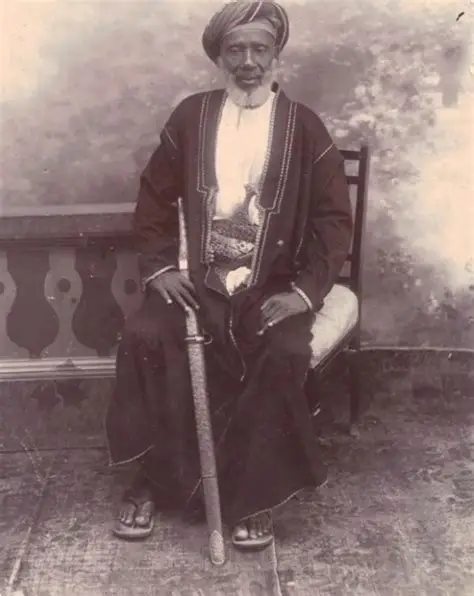
Tippu Tip was a nineteenth-century East African trader, political figure and expedition leader whose influence extended from Zanzibar into the Congo Basin. His trading networks connected the East African coast with communities deep in Central Africa. He accumulated considerable wealth through the ivory and slave trades and established political authority over a large territory.
His life unfolded during a period of expanding international commerce and European colonial expansion. He worked with European explorers, negotiated with Zanzibar’s rulers and later became governor of Stanley Falls in the Congo Free State. His autobiography provides a rare account of this world from the perspective of an African-based trader who participated in its commercial and political struggles.
Early Life and Background
Tippu Tip was born Hamad bin Muhammad al-Murjabi, probably around 1832, on the island of Zanzibar. Some historical accounts give 1837 as his birth year, so the exact date remains uncertain. He came from a family connected to the trading networks linking Zanzibar with the East African interior.
His father, Muhammad bin Juma, belonged to a merchant family with established commercial relationships across the region. These connections helped Tippu Tip understand the routes, alliances and trading practices that shaped the interior economy.
He grew up in Zanzibar, an important centre of Indian Ocean commerce. Traders moved goods between the African mainland, Arabia, India and other parts of the world. Ivory, cloves, textiles and enslaved people formed part of this extensive commercial system.
Tippu Tip entered this environment at a young age. He developed relationships with local leaders and traders who could provide access to inland markets. These connections later helped him organise large expeditions into Central Africa.
Trading Expeditions into Central Africa
During the late 1850s and early 1860s, Tippu Tip began travelling into the African interior. His expeditions initially involved relatively small groups, but his operations expanded as he accumulated wealth and established commercial relationships.
By the late 1860s, he commanded much larger caravans. These journeys crossed difficult terrain and connected Zanzibar with territories around Lake Tanganyika and the Congo Basin. His trading network relied on armed escorts, porters, local intermediaries and agreements with regional authorities.
Ivory became one of his most valuable commodities. His agents acquired tusks from hunters and traders and transported them towards coastal markets. Demand for ivory in international markets made the trade highly profitable.
However, Tippu Tip’s commercial success also depended heavily on slavery. His expeditions captured and traded enslaved Africans, while his network supplied people to plantations and other markets. He later acquired plantations himself on Zanzibar. His wealth therefore came from an economic system that inflicted severe violence and exploitation on African communities.
The nickname Tippu Tip has often been linked to the sound of gunfire during his expeditions. His armed caravans helped him secure trading routes and enforce his authority. They also contributed to the violence associated with the expansion of his commercial empire.
Political Influence and Territory in the Congo Basin
Tippu Tip gradually developed political authority across parts of eastern and central Africa. His influence became particularly strong in the Maniema region, west of Lake Tanganyika. He established trading settlements and appointed local representatives to manage territories and commercial activities.
In 1875, he settled at Kasongo, which became an important centre of his power. From there, he supervised trade, maintained relationships with local leaders and expanded his influence across surrounding territories.
His authority was not based on a modern centralised state. Instead, it depended on armed followers, commercial agreements and alliances with local political figures. He often confirmed existing leaders in their positions when they cooperated with his interests.
Tippu Tip remained connected to the Sultan of Zanzibar, whose authority extended over important coastal and mainland interests. His political influence nevertheless gave him considerable independence in the interior.
Relationships with European Explorers
Tippu Tip became an important figure in the history of European exploration in Central Africa. His knowledge of inland routes, languages and regional politics made him valuable to foreign travellers.
He encountered the Scottish missionary and explorer David Livingstone during the latter’s travels in Central Africa. He also assisted Henry Morton Stanley, the British-American explorer, during expeditions into the Congo region.
In 1876 and 1877, Tippu Tip accompanied Stanley on part of his journey along the Congo River. Their relationship reflected the practical dependence of European explorers on African traders and guides who understood the region.
Stanley later recruited him to provide men and supplies for the Emin Pasha Relief Expedition. However, their relationship deteriorated when the expedition encountered serious difficulties. Tippu Tip eventually withdrew from the arrangement.
Governor of Stanley Falls
In 1887, Tippu Tip accepted an appointment as governor of the Stanley Falls district in the Congo Free State. King Leopold II of Belgium had established control over the territory through his colonial project in Central Africa.
The appointment reflected Tippu Tip’s influence and the European administration’s need for his cooperation. He was expected to manage relations with traders and local communities while supporting the new colonial authority.
The arrangement soon became difficult. European officials wanted to control the established trading networks but often refused to provide the resources Tippu Tip needed to maintain authority. Other traders also resented his cooperation with the Belgian administration.
He left Stanley Falls in 1890 and returned to Zanzibar. Conflict between Swahili-Arab trading forces and the Congo Free State continued after his departure. His son, Sefu bin Hamid, became involved in the resistance and died during the fighting in 1893.
The Belgian colonial administration eventually destroyed the political and commercial system Tippu Tip had built in the Congo Basin.
Autobiography and Historical Importance
One of Tippu Tip’s most unusual contributions to historical study was his autobiography. After retiring to Zanzibar, he dictated an account of his life in Swahili. Heinrich Brode, a German resident of Zanzibar, transcribed the narrative and prepared a translation.
The autobiography appeared in print in the early twentieth century. It became an important historical document because it presented nineteenth-century trade and exploration from the perspective of a prominent African-based participant.
The account describes trading journeys, political relationships, commercial negotiations and encounters with European explorers. It also reveals how Tippu Tip understood his own authority and place within the changing region.
Historians must read the work critically. It reflects his personal perspective and does not provide a complete account of the suffering caused by the slave trade. Nevertheless, it offers valuable insight into the networks and political relationships that shaped East and Central Africa.
Retirement and Death
Tippu Tip returned permanently to Zanzibar after leaving the Congo in 1890. He spent his final years away from the expeditions and political conflicts that had defined much of his earlier life.
The decline of his mainland influence coincided with the expansion of European colonial control. The British and Germans strengthened their positions in East Africa, while Belgium consolidated control over the Congo Basin.
Tippu Tip died in Zanzibar in June 1905, aged about 73. His death came at a time when the commercial and political world that had supported his rise was undergoing profound change.
Legacy
Tippu Tip remains a controversial figure in East African and Central African history. He was a powerful trader, expedition leader and political authority who helped connect Zanzibar with the Congo Basin. His knowledge of inland routes also made him an important figure in the history of European exploration.
However, his commercial empire depended on the exploitation and enslavement of African people. His role in the slave trade cannot be separated from his achievements as a trader and political leader. The wealth and influence he accumulated came at a tremendous human cost.
His autobiography gives historians an unusual first-person perspective on nineteenth-century African commerce and politics. It helps explain how regional traders built networks, negotiated authority and responded to the arrival of European colonial powers.
Tippu Tip’s life therefore offers insight into both African agency and the violence of the nineteenth-century trading system. His story remains important for understanding the history of Zanzibar, the Congo Basin and the wider Indian Ocean world.
Frequently Asked Questions
Who was Tippu Tip?
Tippu Tip was a Zanzibari trader, political leader and expedition organiser. He became influential in the ivory and slave trades and established political authority in parts of Central Africa.
What was Tippu Tip’s real name?
His full name was Hamad bin Muhammad al-Murjabi. He became widely known by the nickname Tippu Tip.
When was Tippu Tip born and when did he die?
He was born around 1832, although some accounts give 1837. He died in Zanzibar in June 1905.
What was Tippu Tip known for?
He was known for his trading expeditions, political influence in the Congo Basin, relationships with European explorers and involvement in the ivory and slave trades.
Did Tippu Tip write an autobiography?
Yes. He dictated an account of his life in Swahili after retiring to Zanzibar. Heinrich Brode transcribed and translated the work, which became an important historical record.
What was Tippu Tip’s connection to Henry Morton Stanley?
Tippu Tip assisted Stanley during his expeditions in Central Africa. He also agreed to supply men for the Emin Pasha Relief Expedition, although their relationship later deteriorated.