|
Getting your Trinity Audio player ready... |
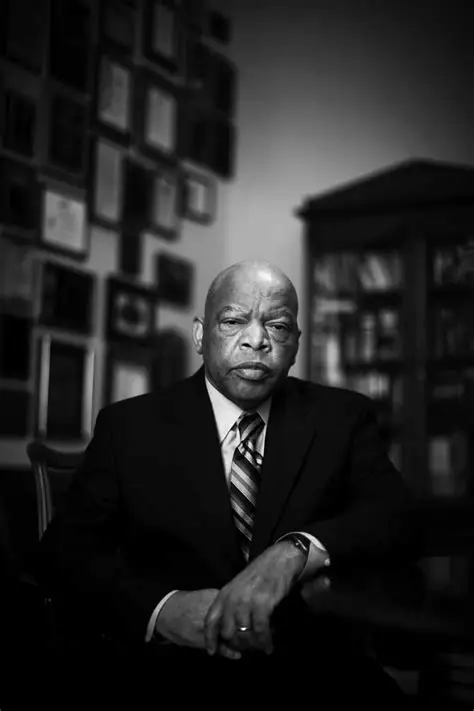
John Lewis was an American civil rights leader and politician who dedicated his life to fighting racial discrimination and protecting voting rights. He became one of the most influential figures in the American civil rights movement through his commitment to nonviolent protest, even when demonstrations exposed him to arrests, threats, and severe physical violence.
Lewis helped organize historic campaigns against racial segregation, including the 1961 Freedom Rides, the 1963 March on Washington, and the 1965 Selma voting rights marches. He later served in the United States House of Representatives for more than three decades, continuing his advocacy for equality through public service.
His life connected the struggles of the civil rights movement with the continuing effort to protect democratic participation and equal treatment under the law.
Who Was John Lewis?
John Robert Lewis was born on February 21, 1940, near Troy, Alabama, in the United States. He grew up in a family of sharecroppers during an era when racial segregation restricted the rights and opportunities of African Americans across the American South.
Lewis became involved in the civil rights movement while studying in Nashville, Tennessee. He joined student protests against segregated public facilities and later emerged as a national leader in the campaign to end racial discrimination.
His commitment to nonviolent resistance shaped his activism throughout his life. Lewis believed that peaceful protest could expose injustice, mobilize public support, and pressure political leaders to change discriminatory laws.
He became chairman of the Student Nonviolent Coordinating Committee (SNCC) in 1963 and helped coordinate major campaigns for racial equality and voting rights. After decades of activism, he entered electoral politics and represented Georgia’s Fifth Congressional District from 1987 until his death in 2020.
Early Life and Education
Lewis was one of ten children born to Eddie and Willie Mae Lewis. His parents worked as sharecroppers before eventually acquiring farmland of their own. Growing up in rural Alabama, he experienced the restrictions of segregation in schools, public facilities, and everyday life.
As a child, Lewis developed a strong interest in religion and public speaking. He sometimes preached to the family’s chickens, imagining himself as a minister. He also listened to sermons by Martin Luther King Jr. and became increasingly interested in the struggle for racial equality.
The Montgomery bus boycott of 1955 and 1956 helped deepen his commitment to civil rights. Lewis admired the nonviolent approach of King and other activists who challenged segregation through organized protest.
In 1957, he enrolled at the American Baptist Theological Seminary in Nashville, now known as American Baptist College. He participated in workshops on nonviolent resistance and joined student campaigns to desegregate lunch counters.
Lewis later attended Fisk University, where he earned a bachelor’s degree in religion and philosophy in 1967. His education strengthened his understanding of social justice and helped prepare him for a lifetime of public activism.
John Lewis and the Civil Rights Movement
Lewis became a prominent student activist during the Nashville sit-in movement of 1960. Alongside other young protesters, he challenged racial segregation at lunch counters and accepted arrest rather than abandon the campaign. The demonstrations contributed to the desegregation of public eating establishments in Nashville.
In 1960, Lewis helped establish the Student Nonviolent Coordinating Committee. The organization mobilized young people to challenge segregation, register Black voters, and organize community campaigns across the South. Lewis became its chairman in 1963 and helped coordinate some of the period’s most important civil rights activities.
In 1961, he joined the Freedom Rides, a campaign that challenged segregation on interstate buses and in terminal facilities. Freedom Riders faced violent attacks and arrests as they traveled through the South. Lewis himself suffered beatings and repeated arrests, but he continued his work.
Lewis also helped organize the March on Washington for Jobs and Freedom on August 28, 1963. At 23, he became the youngest speaker at the historic gathering, which brought approximately 250,000 people to Washington, D.C. The event demanded civil rights protections, employment opportunities, and greater economic equality.
His most famous confrontation with segregationist violence occurred on March 7, 1965, during a voting rights march in Selma, Alabama. Lewis and fellow activist Hosea Williams led hundreds of peaceful demonstrators across the Edmund Pettus Bridge as they began a march toward Montgomery.
State troopers attacked the marchers with clubs and tear gas. Lewis suffered a fractured skull during the assault, which became known as Bloody Sunday. Television coverage and photographs of the violence helped draw national attention to voter suppression in the South.
The Selma campaign increased pressure on federal lawmakers to protect voting rights. President Lyndon B. Johnson signed the Voting Rights Act into law on August 6, 1965. The legislation prohibited discriminatory voting practices and established federal protections for eligible voters.
Political Career and Major Achievements
After leaving SNCC in 1966, Lewis continued working on civil rights, community development, and voter registration. He served in several organizations dedicated to expanding political participation and improving opportunities for disadvantaged communities.
In 1970, he became director of the Voter Education Project, which supported voter registration campaigns across the American South. The organization helped register millions of voters, strengthening political participation among African Americans and other underrepresented groups.
Lewis also worked in the administration of President Jimmy Carter during the 1970s. He later served on the Atlanta City Council before pursuing a seat in the United States House of Representatives.
In 1986, voters elected Lewis to represent Georgia’s Fifth Congressional District. He took office in January 1987 and remained in Congress until his death in 2020.
During his congressional career, Lewis advocated for voting rights, education, health care, poverty reduction, and civil rights protections. He also supported legislation addressing discrimination and expanding opportunities for historically marginalized communities.
Lewis became known for his willingness to challenge political leaders when he believed they threatened democratic participation or civil rights. In 2016, he helped lead a sit-in on the House floor with other Democratic lawmakers to demand congressional action on gun violence.
President Barack Obama awarded Lewis the Presidential Medal of Freedom in 2011, recognizing his contributions to American civil rights and public service.
Personal Life and Death
John Lewis married Lillian Miles in 1968. They had one son, John-Miles Lewis. His family life remained relatively private while he maintained a demanding schedule as an activist and elected official.
Throughout his career, Lewis emphasized nonviolence, civic participation, and the responsibility to confront injustice. He often encouraged people to create what he called “good trouble,” meaning principled action that challenged unfair laws and practices.
In December 2019, Lewis announced that he had been diagnosed with advanced pancreatic cancer. Despite his illness, he continued to express support for civil rights and democratic participation.
He died on July 17, 2020, at the age of 80. His death prompted tributes from political leaders, civil rights organizations, and people whose lives his activism had influenced.
John Lewis’ Legacy and Influence
John Lewis left a lasting mark on American history through his work for racial equality, voting rights, and democratic participation. His activism helped expose the violence of segregation and contributed to public pressure for major civil rights legislation.
The campaigns he helped lead demonstrated how organized, nonviolent protest could challenge discriminatory institutions. His work also helped build the political and organizational foundations that allowed more African Americans to register, vote, and seek public office.
Lewis carried these principles into Congress, where he continued to defend voting rights and civil rights protections. His long career illustrated the connection between grassroots organizing and legislative change.
His influence extends beyond the United States. Activists and civic organizations continue to draw lessons from his commitment to peaceful resistance, collective action, and the courage to challenge injustice.
John Lewis is remembered as a leader who endured personal danger in pursuit of equal rights and spent his later years working through democratic institutions to protect those gains. His legacy remains closely tied to the continuing struggle for fair representation and equal treatment under the law.
Conclusion
John Lewis was a civil rights pioneer whose activism helped transform American society. From the Nashville sit-ins and Freedom Rides to the Selma voting rights marches, he confronted segregation through determined nonviolent resistance.
His later service in Congress allowed him to continue pursuing the goals that had shaped his youth. Through decades of activism and public service, Lewis helped advance voting rights, racial equality, and democratic participation, leaving a legacy that continues to inspire future generations.