|
Getting your Trinity Audio player ready... |
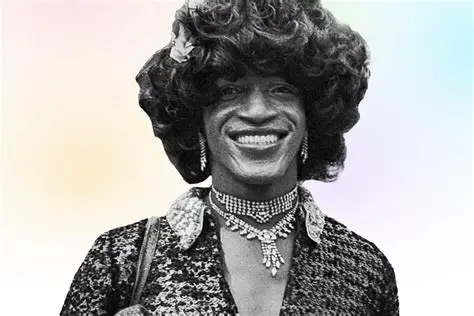
Marsha P. Johnson was an American LGBTQ+ rights activist, performer, and community organizer who became an important figure in the struggle for gay and transgender rights in New York City. She was particularly known for supporting homeless LGBTQ+ young people, participating in demonstrations for equal rights, and helping establish organizations that provided support to transgender people.
Born Malcolm Michaels Jr. in Elizabeth, New Jersey, in 1945, Johnson moved to New York City as a young adult and became a familiar presence in Greenwich Village. She lived openly as a gender-nonconforming person and later became widely identified as a transgender woman, although she sometimes described herself using terms such as “transvestite” and “gay.”
Johnson’s life unfolded during a period when homosexuality and gender nonconformity faced intense legal and social discrimination. Her activism developed through direct involvement in street protests, community support, and political organizing rather than through conventional institutions.
Early Life of Marsha P. Johnson
Marsha P. Johnson was born on August 24, 1945, in Elizabeth, New Jersey. Her parents were Malcolm Michaels Sr., who worked for General Motors, and Alberta Claiborne Michaels. She was the fifth of seven children.
Johnson experienced religious and social pressures while growing up. As a young person, she began expressing herself through clothing associated with femininity, but the hostility surrounding gender nonconformity made it difficult for her to live openly.
She graduated from Thomas A. Edison High School in 1963. After leaving New Jersey, she moved to New York City, where she adopted the name Marsha P. Johnson.
The “P” stood for “Pay It No Mind,” an expression she reportedly used when people questioned her gender or appearance. The phrase became closely associated with her public identity.
Life in Greenwich Village
Johnson arrived in New York during a period of major cultural and political change. Greenwich Village had become an important center of LGBTQ+ life, but the community remained subject to police harassment, discrimination, poverty, and violence.
Johnson supported herself through a combination of sex work, performance, and other informal work. She became known for her distinctive style, often wearing elaborate clothing, flowers, and jewelry.
She also performed at venues and participated in the drag scene. Her public presence was not limited to entertainment. Johnson developed strong relationships within New York’s LGBTQ+ community and frequently helped people who were struggling with homelessness or poverty.
Her own experiences with economic insecurity gave her a direct understanding of the challenges faced by marginalized young people.
Stonewall and the 1969 Uprising
Marsha P. Johnson is frequently associated with the Stonewall uprising of June 1969, an event widely regarded as a turning point in the modern LGBTQ+ rights movement.
The Stonewall Inn in Greenwich Village was a gathering place for LGBTQ+ people, many of whom had few other spaces where they could socialize. Police raided the bar during the early morning hours of June 28, 1969, triggering several nights of confrontation and protest.
Johnson was present in the broader Greenwich Village community during the uprising. Over time, accounts have often described her as one of the people who resisted police during the confrontation. However, the precise details of who initiated particular actions during the first night have been disputed, and Johnson herself gave different accounts at different times.
What is clear is that she became an important figure in the activism that followed Stonewall. She participated in demonstrations and helped turn the anger surrounding police harassment into organized political action.
Gay Liberation Front and Activism
Following Stonewall, Johnson became involved with the Gay Liberation Front, one of the organizations that emerged from the uprising.
The movement demanded an end to discrimination and police harassment and called for broader social acceptance of LGBTQ+ people. Johnson participated in marches, protests, and community events while continuing to support people living on the margins of New York’s LGBTQ+ community.
Her activism was closely connected to her everyday life. Rather than separating political advocacy from community support, she frequently helped people find food, clothing, shelter, or companionship.
Johnson became particularly concerned about young LGBTQ+ people who were rejected by their families and forced to live on the streets.
STAR and Sylvia Rivera
In 1970, Johnson and fellow activist Sylvia Rivera established Street Transvestite Action Revolutionaries, commonly known as STAR.
The organization focused on transgender people and other young members of the LGBTQ+ community who faced homelessness and poverty. Johnson and Rivera established the STAR House, where homeless transgender people and other young LGBTQ+ people could find shelter.
STAR was one of the earliest organizations in the United States to place transgender people at the center of political organizing and community support.
Johnson and Rivera also participated in demonstrations demanding transgender inclusion within the broader gay rights movement. Their work highlighted tensions that sometimes existed between transgender activists and organizations dominated by gay and lesbian members.
STAR’s emphasis on housing, survival, and direct community care also anticipated themes that later became important within transgender activism.
Marsha P. Johnson and ACT UP
Johnson’s activism continued through the 1970s and 1980s. She remained involved in demonstrations and community activities while supporting people affected by poverty and discrimination.
During the AIDS crisis, Johnson participated in protests and supported members of the LGBTQ+ community affected by HIV and AIDS. Her activism reflected the broader connections between transgender rights, poverty, homelessness, health, and discrimination.
She also worked with organizations and activists in New York who were fighting for LGBTQ+ rights. Her approach remained strongly community-based, particularly for people who lacked stable housing or institutional support.
Challenges and Personal Life
Johnson’s life was marked by poverty and periods of mental health difficulty. She experienced harassment and violence because of her gender expression and sexuality.
Despite these challenges, she remained a visible presence in Greenwich Village. Friends and activists remembered her for generosity, humor, flamboyant self-expression, and willingness to help people who were struggling.
Johnson’s life also illustrates the limitations of applying modern identity categories to historical figures. She lived before contemporary understandings of transgender identity became widely established. Although she is now widely honored as a transgender woman, her own language about herself varied depending on the time and context.
Death of Marsha P. Johnson
Marsha P. Johnson disappeared after participating in New York’s annual Pride celebration in July 1992. Her body was found in the Hudson River on July 6, 1992.
The New York Police Department initially classified her death as a suicide. Friends and activists disputed that conclusion and argued that the circumstances required further investigation.
In 2012, the New York Police Department reopened the case and changed the classification from suicide to undetermined. The circumstances surrounding Johnson’s death remain unresolved.
Her death became an important part of discussions about violence against transgender people and the treatment of marginalized communities by law enforcement.
Marsha P. Johnson’s Legacy
Marsha P. Johnson’s historical significance comes from the combination of activism, community care, and personal visibility. She was not simply a participant in demonstrations. She helped create spaces where marginalized LGBTQ+ people could find practical support.
Her work with Sylvia Rivera through STAR became especially influential. The organization demonstrated that transgender activism could address immediate material needs such as housing while also challenging discrimination.
Johnson’s legacy also became increasingly recognized in the decades after her death. The Marsha P. Johnson Institute, established in 2019, was named in her honor and works to protect and empower Black transgender people.
Her life has also been documented in books, exhibitions, documentaries, and archival projects. The 2012 documentary Pay It No Mind: The Life and Times of Marsha P. Johnson helped introduce her story to a wider audience, while the Netflix documentary The Death and Life of Marsha P. Johnson examined her activism and the questions surrounding her death.
Marsha P. Johnson has since become one of the most recognizable figures in the history of transgender activism in the United States. Her image and name appear in public memorials and LGBTQ+ historical projects, including a state park in Brooklyn named the Marsha P. Johnson State Park.
Why Marsha P. Johnson Remains Historically Important
Johnson remains important because she represented a form of activism rooted in survival and community. She advocated for people who were often excluded not only from mainstream society but also from more established parts of the LGBTQ+ movement.
Her work shows that the history of LGBTQ+ rights was shaped by people confronting practical problems as well as demanding legal equality. Housing, poverty, police treatment, violence, health, and social acceptance were all connected to the lives of the people Johnson sought to support.
Her partnership with Sylvia Rivera also helped preserve an important part of transgender history. Together, they insisted that transgender people, particularly those living in poverty, should have a place within the movement and should be able to organize around their own needs.
Johnson’s legacy therefore extends beyond Stonewall. Her historical importance rests on the broader body of work she carried out before and after the uprising, particularly her efforts to support people who had few other sources of protection.
Conclusion
Marsha P. Johnson was a pioneering LGBTQ+ activist whose life reflected the struggles and possibilities of New York’s gay and transgender communities during the second half of the 20th century.
From her early years in New Jersey to her life in Greenwich Village, her participation in the activism surrounding Stonewall, and her work with Sylvia Rivera and STAR, Johnson consistently supported people facing discrimination, poverty, and homelessness.
Her death remains surrounded by unanswered questions, but her activism has become increasingly recognized as an important part of American LGBTQ+ history. Johnson’s legacy endures through organizations, memorials, historical research, and the continuing work of activists who advocate for transgender people facing exclusion and violence.