|
Getting your Trinity Audio player ready... |
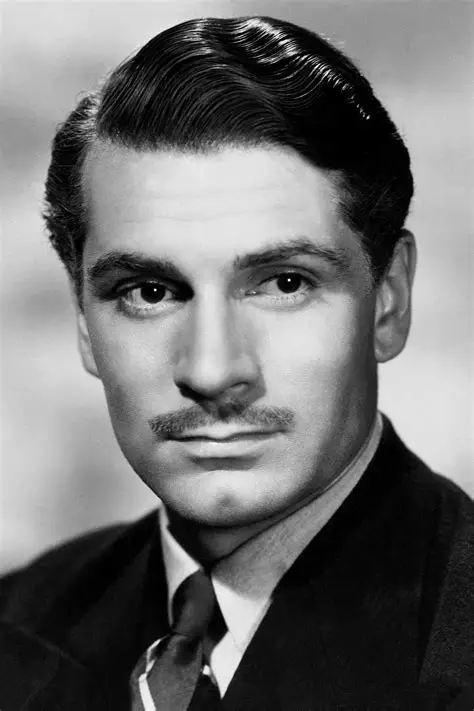
Laurence Olivier was an English actor and director whose career became closely associated with Shakespearean theatre, British cinema and the development of the modern National Theatre. He performed leading roles on stage and screen for more than six decades, directed several important films and became the first artistic director of the National Theatre. His performances in Shakespearean roles, including Hamlet, Richard III, Othello and King Lear, established an enduring part of his reputation.
Olivier also achieved major recognition in cinema. His 1948 film Hamlet won the Academy Award for Best Picture, while Olivier himself won Best Actor and received a directing nomination. He later earned another Academy Award nomination for his performance in Marathon Man in 1977.
Early Life and Family Background
Laurence Kerr Olivier was born on May 22, 1907, in Dorking, Surrey, England. His father, Gerard Kerr Olivier, was an Anglican clergyman, while his mother was Agnes Louise Crookenden. Olivier grew up in a religious household in which his father’s profession shaped much of the family’s life.
The young Olivier developed an interest in acting early. His education also gave him substantial exposure to literature, classical texts and Shakespeare, subjects that later became central to his professional career. His brother Richard and sister Sybille were also part of his family upbringing.
Olivier’s early environment did not initially point toward a career in cinema. His path developed through school performances and the professional British stage, where he gradually established himself as an ambitious young actor.
Education and Beginning in Theatre
Olivier attended St Edward’s School in Oxford and later received formal theatrical training at the Central School of Speech and Drama in London. His abilities became increasingly apparent during his teenage years, particularly in Shakespearean roles.
He entered professional theatre during the 1920s, appearing in productions that allowed him to develop experience in both classical and modern drama. In 1928, he played Captain Stanhope in R. C. Sherriff’s Journey’s End, a production that became an important stage success. The National Theatre archive records Olivier in the first performance of the play.
His progress continued through London’s theatre world, where he worked with leading performers and directors. By the 1930s, he had become an established actor with growing opportunities in both Britain and the United States.
Rise to Prominence
Olivier’s reputation grew rapidly through Shakespearean performances. His stage roles included Romeo, Henry V, Hamlet and other major characters. He was particularly interested in bringing physical energy and emotional intensity to classical roles while maintaining the demands of Shakespeare’s language.
His private and professional life also became closely associated with actress Vivien Leigh. The two began a relationship while both were married to other people and eventually married in 1940. Their partnership became one of the most famous relationships in British theatre, although their marriage later ended in divorce.
Olivier continued moving between theatre and film. His stage reputation helped him secure increasingly important screen roles, while cinema gave him an international audience beyond Britain’s theatre community.
Shakespeare and International Career
Olivier became especially associated with Shakespeare during the 1930s and 1940s. His performances in Henry V, Hamlet and Richard III demonstrated his ability to translate Shakespearean drama into successful cinema while retaining a strong connection with the stage.
His 1944 film Henry V was particularly important. Olivier directed and starred in the production, which combined Shakespeare’s play with elaborate visual sequences. The film received an Academy Award nomination for Best Picture and helped establish Olivier as both an actor and filmmaker.
His Hamlet, released in 1948, went further. Olivier directed and starred as the Danish prince, creating a psychologically focused adaptation of Shakespeare’s tragedy. At the 21st Academy Awards in 1949, Olivier won Best Actor, while Hamlet won Best Picture. Olivier was also nominated for directing.
These achievements made Olivier one of the most internationally recognized British actors of his generation.
Film Career and Major Roles
Although Shakespeare remained central to Olivier’s career, his film work extended well beyond the playwright’s works. He appeared in films including Wuthering Heights, Rebecca, Spartacus, The Entertainer, Sleuth and Marathon Man.
His performance as the sinister dentist Christian Szell in Marathon Man demonstrated the range of roles he could undertake late in his career. The performance earned him an Academy Award nomination for Best Supporting Actor in 1977.
Olivier also worked extensively in television. His later career included major dramatic productions that brought classical and contemporary theatre to audiences who might never have seen him on stage.
National Theatre Leadership
One of Olivier’s most important institutional contributions came through the National Theatre. When the company began operations in 1963, he became its first director. The National Theatre’s archive identifies its inaugural production as Hamlet, directed by Olivier and starring Peter O’Toole, at the Old Vic.
Olivier’s leadership helped establish the National Theatre as a major British institution. The company initially operated from the Old Vic before eventually moving to its purpose-built South Bank complex.
His work there involved more than performing. He recruited major actors and directors, supported a wide repertory and helped establish an institutional structure capable of sustaining ambitious theatrical productions. His period at the National Theatre also included his own performances in roles such as Othello and Shylock.
Olivier stepped down as director in 1973, although he remained connected with the theatre and continued acting.
Later Career and Personal Life
Olivier married actress Jill Esmond in 1930. They had one son, Tarquin, before divorcing in 1940. His marriage to Vivien Leigh lasted from 1940 until their divorce in 1960.
He married actress Joan Plowright in 1961. They had three children, Richard, Tamsin and Julie-Kate. The couple remained together for the rest of Olivier’s life.
During his later decades, Olivier continued working despite serious health problems. He appeared in films and television productions and remained an important figure in British cultural life. His papers and correspondence later became part of major archival collections, including a substantial collection at the British Library.
He was created a life peer in 1971 as Baron Olivier of Brighton, becoming Lord Olivier. This placed him among the small number of British performers who received a seat in the House of Lords.
Death
Laurence Olivier died on July 11, 1989, at his home in Steyning, West Sussex, aged 82. He had spent his final years dealing with serious illness while continuing to receive recognition for his contribution to theatre and film.
His death marked the end of a career that had connected several generations of British performance. His professional life had begun during the theatre of the 1920s and continued into the era of television and modern international cinema.
Legacy and Historical Significance
Laurence Olivier’s legacy rests on his work as an actor, director and institution builder. His Shakespearean performances helped bring major classical roles to international audiences, while his film adaptations demonstrated that Shakespeare could become successful cinema without abandoning the structure of the original plays.
His leadership at the National Theatre created another important part of his historical contribution. The institution became a permanent center for British theatre, and Olivier’s role in its early development linked his personal artistic reputation with the growth of a national theatrical organization.
His career also demonstrated the movement between stage and screen that became increasingly important during the twentieth century. Olivier could perform Shakespeare in a theatre, direct a major film, appear in contemporary drama and later take supporting roles in Hollywood productions.
The preservation of his papers in major archives further reflects the documentary importance of his career. The surviving records provide material for studying British theatre, cinema, acting practice and the institutional development of the National Theatre.
Frequently Asked Questions
Who was Laurence Olivier?
Laurence Olivier was an English actor and director known especially for Shakespearean theatre, British cinema and his leadership of the National Theatre.
What was Laurence Olivier famous for?
He was particularly known for performances in Shakespearean roles, including Hamlet, Henry V, Richard III, Othello and Shylock, as well as major film performances.
Did Laurence Olivier win an Oscar?
Yes. Olivier won the Academy Award for Best Actor for his performance in Hamlet at the 1949 Academy Awards. The film also won Best Picture.
Was Laurence Olivier the first director of the National Theatre?
Yes. Olivier became the National Theatre’s first director when the company began in 1963. Its inaugural production was Hamlet at the Old Vic.
When did Laurence Olivier die?
Laurence Olivier died on July 11, 1989, aged 82.
Conclusion
Laurence Olivier’s career connected the classical British stage with international cinema and helped establish the National Theatre as a major cultural institution. His performances in Shakespeare’s plays became particularly influential, while his work as a director demonstrated his interest in shaping productions as well as acting in them.
From his early stage career to his later film and television appearances, Olivier remained deeply connected to the craft of performance. His surviving films, theatre records and archival papers continue to document the career of one of twentieth-century Britain’s most significant theatrical figures.