|
Getting your Trinity Audio player ready... |
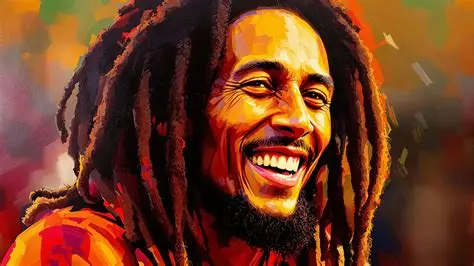
Bob Marley was a Jamaican singer, songwriter and musician who made reggae a global force. Born Robert Nesta Marley on February 6, 1945, in Nine Mile, Jamaica, he rose from a modest background to become one of the most influential musicians of the 20th century. His songs addressed freedom, faith, poverty, racism, political conflict and human unity.
Marley’s music was strongly shaped by Rastafari and his experiences in Jamaica. He later connected those themes with wider struggles across Africa and the African diaspora. His international success also gave reggae a global audience and made him an important cultural figure beyond music.
Early Life and Family Background
Bob Marley was born Robert Nesta Marley in Nine Mile, Saint Ann Parish, Jamaica. His mother was Cedella Booker, while his father was Norval Sinclair Marley. His parents came from different racial and social backgrounds.
Marley spent his early childhood in rural Nine Mile. His upbringing exposed him to Jamaican traditions and the storytelling culture of the community. These experiences later influenced his songwriting and his strong connection to Jamaican identity.
His relationship with his father was limited. Norval provided financial support but spent little time with his son. Marley eventually moved to Kingston, where he lived with relatives before returning to his mother.
As a teenager, Marley settled in Trench Town in western Kingston. The area was poor, but it was also rich in music and community life. Trench Town later became a major influence on his songs and public image.
Education and Formative Years
Marley’s formal education was limited compared with the academic backgrounds of many public figures. Music became his main interest while he was still young.
In Kingston, he became involved with other aspiring musicians. He received vocal training from Joe Higgs, an experienced Jamaican singer who helped young performers develop their skills.
Higgs introduced Marley to Peter Tosh and Neville Livingston, later known as Bunny Wailer. Their meeting became a major turning point in Marley’s life.
The three young musicians formed a vocal group that became The Wailers. Their early work developed during Jamaica’s transition from ska to rocksteady and later reggae.
Beginning His Music Career
Marley began recording music while still a teenager. His early recording career included the song “Judge Not,” which was recorded in 1961.
In the early 1960s, The Wailers began working with producer Clement “Coxsone” Dodd at Studio One. Their music soon attracted a local following.
Their 1964 recording “Simmer Down” became an important early success. The song addressed violence among young people in Kingston and reflected the social concerns that later became central to Marley’s music.
The Wailers continued recording during the 1960s. Marley also spent a period outside Jamaica before returning to continue his musical career.
During these years, Marley became increasingly influenced by Rastafari. His faith later shaped his lyrics, appearance and understanding of African history.
The Wailers and Rise to Fame
The Wailers developed from a Jamaican vocal group into one of the country’s most important musical acts. Marley, Tosh and Bunny Wailer formed the group’s best-known early core.
In the early 1970s, The Wailers worked with producer Lee “Scratch” Perry. Their collaboration helped create a powerful sound built around heavy bass, drums and socially conscious lyrics.
The group then gained a major international opportunity through Chris Blackwell and Island Records. Catch a Fire, released in 1973, introduced The Wailers to a wider international rock audience.
Burnin’ followed later in 1973. It included “Get Up, Stand Up” and “I Shot the Sheriff.” The latter became a major international hit after Eric Clapton recorded his own version in 1974.
Peter Tosh and Bunny Wailer left the group in 1974. Marley then continued with a new lineup under the name Bob Marley and the Wailers. The I-Threes, including Rita Marley, became the group’s backing vocal trio.
Major Albums and Achievements
Marley’s international career grew rapidly during the 1970s. Natty Dread, Rastaman Vibration, Exodus, Kaya, Survival and Uprising became major parts of his musical legacy.
Exodus, released in 1977, was especially important. It combined spiritual themes, political ideas and songs about love and freedom.
Survival, released in 1979, placed African unity near the centre of Marley’s message. The album included “Africa Unite” and “Zimbabwe.”
His final studio album released during his lifetime was Uprising in 1980. It included “Redemption Song,” “Could You Be Loved” and other songs that became lasting parts of his catalogue.
Marley’s influence reached beyond reggae. Rock, punk, hip-hop and pop musicians later drew from his music and message. The Rock & Roll Hall of Fame inducted him in 1994 as a performer.
Political Conflict and the 1976 Shooting
Marley’s career developed during a period of serious political conflict in Jamaica. Rival supporters of the People’s National Party and Jamaica Labour Party were involved in growing tensions.
In December 1976, Marley was scheduled to perform at the Smile Jamaica concert in Kingston. Two days before the event, armed attackers entered his home and shot Marley, Rita Marley and manager Don Taylor.
Marley was injured but still appeared at the concert on December 5. His decision to perform became an important moment in his history.
After the attack, Marley spent time in London. There he recorded much of Exodus, one of the defining albums of his career.
Exodus and International Success
Exodus strengthened Marley’s position as an international star. The album combined political themes with songs about love, spirituality and personal freedom.
Marley returned to Jamaica in 1978 for the One Love Peace Concert. The event took place in Kingston on April 22.
During the concert, Marley brought political rivals Michael Manley and Edward Seaga onto the stage. The two leaders joined hands during the performance. The moment became one of the most memorable images associated with Marley’s public role in Jamaica.
The episode reinforced his image as an artist who could cross political and social divisions. It also showed how music had become part of Jamaica’s wider political life.
Africa, Rastafari and Social Justice
Rastafari remained central to Marley’s identity. His religious beliefs influenced many of his songs and his understanding of Africa.
His music frequently addressed colonialism, racism, poverty and political oppression. These themes gave his work meaning among audiences facing similar struggles.
Marley’s connection with Africa became especially strong in his later career. His 1979 album Survival included songs that expressed Pan-African solidarity.
The song “Zimbabwe” became an important part of his African legacy. Marley and the Wailers performed at Zimbabwe’s independence celebrations in April 1980. The performance connected his music directly with the country’s liberation struggle.
His African influence extended beyond politics. Marley helped strengthen cultural connections between Jamaica, Africa and the wider African diaspora.
Personal Life and Family
Bob Marley married Rita Anderson in 1966. Rita later became part of the I-Threes and performed with Bob Marley and the Wailers.
Marley had several children, including musicians Ziggy, Stephen, Julian, Ky-Mani and Damian Marley. Several members of his family later pursued careers in music.
His family became an important part of preserving his musical and cultural legacy after his death. Rita Marley also played a major role in protecting and promoting his work.
Later Years and Death
In 1977, doctors discovered melanoma after Marley developed an injury to his toe. The cancer later spread to other parts of his body.
Despite his illness, Marley continued recording and performing. He toured extensively in 1980 in support of Uprising. His final recorded concert took place at the Stanley Theatre in Pittsburgh on September 23, 1980.
Marley later travelled to Germany for medical treatment. He became seriously ill while attempting to return to Jamaica.
Bob Marley died in Miami, Florida, on May 11, 1981. He was 36 years old. Jamaica later gave him a state funeral, and he was buried in Nine Mile, the place of his birth.
Legacy and Historical Significance
Bob Marley’s importance extends far beyond his success as a musician. He helped transform reggae from a Jamaican musical style into a global cultural force.
His songs gave international audiences a powerful expression of Jamaican experience. They also connected local struggles with wider questions of freedom, justice, faith and human dignity.
The Rock & Roll Hall of Fame describes Marley as an artist who helped put reggae on the world map. It also recognises the political and spiritual power of his music.
His influence reached several generations of musicians. Artists from different genres have recorded his songs or drawn from his musical approach.
His posthumous recognition has also remained strong. Marley was inducted into the Rock & Roll Hall of Fame in 1994. He received the Grammy Lifetime Achievement Award in 2001. His album Exodus was named Album of the Century by Time magazine in 1999, while “One Love” was selected by the BBC as Song of the Millennium.
Marley’s legacy is also important in Africa. His support for African liberation and his performance at Zimbabwe’s independence celebrations strengthened his place in Pan-African cultural history.
Perhaps his greatest achievement was the ability to combine music with ideas. His songs could address political oppression while still speaking about love, faith and hope.
That combination helped make Marley more than a reggae star. He became a symbol of freedom, unity and resistance whose music continues to reach audiences around the world.
Read More: Asmarom Legesse Biography: Early Life, Gadaa Scholarship, Career and Legacy
Frequently Asked Questions
Who was Bob Marley?
Bob Marley was a Jamaican singer, songwriter and musician who became the world’s most internationally recognised reggae artist.
When was Bob Marley born?
Bob Marley was born on February 6, 1945, in Nine Mile, Saint Ann Parish, Jamaica.
What was Bob Marley famous for?
He was famous for making reggae internationally popular and for songs about freedom, justice, spirituality, love and unity.
What was Bob Marley’s real name?
His birth name was Robert Nesta Marley.
Was Bob Marley a Rastafarian?
Yes. Rastafari was central to Marley’s religious beliefs and strongly influenced his music and worldview.
Who was Bob Marley’s wife?
Bob Marley married Rita Anderson in 1966. She later performed as part of the I-Threes.
What were Bob Marley’s most famous songs?
Among his best-known songs are “One Love,” “No Woman, No Cry,” “Redemption Song,” “Get Up, Stand Up,” “I Shot the Sheriff” and “Zimbabwe.”
How did Bob Marley die?
Bob Marley died from cancer complications on May 11, 1981, in Miami, Florida.
How old was Bob Marley when he died?
Bob Marley was 36 years old when he died.
What is Bob Marley remembered for?
He is remembered for making reggae a global genre and for using music to promote freedom, unity, spirituality and social justice.
Conclusion
Bob Marley’s life was short, but his historical influence was enormous. From Nine Mile and Trench Town, he became a global voice for reggae, Rastafari, freedom and African solidarity. His music connected Jamaica with audiences across continents and generations. More than four decades after his death, his songs remain a major part of global music culture and his legacy continues to shape how reggae and Jamaican identity are understood.