|
Getting your Trinity Audio player ready... |
King Tutankhamun Biography
King Tutankhamun was an ancient Egyptian pharaoh who became ruler as a child and died while still a teenager. Although his reign lasted only about nine years, his name became known around the world after archaeologist Howard Carter and his team discovered his tomb in the Valley of the Kings in 1922.
Often called King Tut or the boy king, Tutankhamun ruled during Egypt’s Eighteenth Dynasty, a period when royal authority, religious traditions and monumental building shaped the kingdom. His reign is particularly important because it followed the religious changes introduced by Pharaoh Akhenaten, who had promoted the worship of Aten, the sun disc, above Egypt’s traditional gods.
Tutankhamun’s government restored the worship of traditional Egyptian deities and repaired religious institutions affected by the earlier changes. Yet his fame today rests largely on the extraordinary collection of objects recovered from his tomb, including his gold funerary mask, decorated coffins, furniture, jewellery and personal possessions.
His life still raises questions. Historians continue to examine his family relationships, his health, the circumstances of his death and the political decisions made during his short reign. Archaeological discoveries provide valuable evidence, but some details of his story remain uncertain.
1. King Tutankhamun at a Glance
| Detail | Information |
|---|---|
| Full name | Tutankhamun, also spelled Tutankhamen |
| Common name | King Tut |
| Born | Around 1341 BC, exact date uncertain |
| Birth name | Tutankhaten |
| Died | Around 1327 BC, approximately 18 or 19 years old |
| Reign | Approximately 1336–1327 BC |
| Kingdom | Ancient Egypt |
| Dynasty | Eighteenth Dynasty |
| Father | Commonly identified as Pharaoh Akhenaten |
| Mother | A royal woman whose identity remains uncertain |
| Wife | Ankhesenamun |
| Successor | Ay, followed by Horemheb |
| Burial place | Tomb KV62, Valley of the Kings |
| Famous for | His golden funerary mask and tomb discovered in 1922 |
Dates and some family details remain debated by Egyptologists.
2. Early Life and Birth of Tutankhamun
Tutankhamun was born into Egypt’s royal family during the Eighteenth Dynasty, a period when Egypt was a major power in northeastern Africa and the eastern Mediterranean. His early years coincided with the reign of Akhenaten, a pharaoh who introduced a major change to Egyptian religious life.
Akhenaten elevated the worship of Aten, represented by the sun disc, and reduced the official prominence of traditional gods such as Amun. He established a new royal capital at Akhetaten, now known as Amarna. Tutankhamun is generally believed to have spent at least part of his childhood in this environment.
His original name, Tutankhaten, meant approximately “Living Image of Aten.” The name reflected the religious direction of the royal household at the time of his birth.
Very little is known about his childhood. No reliable record provides a complete account of his education, daily activities or personal experiences before he became king. As a royal child, he would have been raised within the palace system, where officials, tutors and religious authorities played important roles in preparing members of the ruling family for public duties.
The circumstances surrounding his birth also remain incomplete. Genetic research published in 2010 identified a mummy known as the Younger Lady, found in tomb KV35, as Tutankhamun’s mother. The same research supported the identification of Akhenaten as his father. However, the woman’s personal name has not been established with certainty.
These findings helped researchers reconstruct Tutankhamun’s immediate family, although some relationships among the late Eighteenth Dynasty royals remain subjects of scholarly discussion.
3. How Tutankhamun Became Pharaoh
Tutankhamun ascended the throne when he was approximately eight or nine years old. Because he was so young, experienced officials and advisers were important to the operation of the kingdom.
Two figures associated with his reign were Ay, a senior court official who later became pharaoh, and Horemheb, a military commander who eventually succeeded Ay. Their roles illustrate how the royal court and senior administrators helped maintain government during a period of religious and political change.
Being pharaoh involved much more than wearing a crown. The king was expected to oversee administration, support temples, maintain Egypt’s position among neighbouring powers and uphold the religious order that Egyptians believed protected the kingdom.
Tutankhamun’s young age meant that decisions made in his name were likely shaped by experienced members of the royal establishment. However, the surviving evidence does not establish precisely how much personal control he exercised over every decision.
His reign is especially important because it marked a move away from Akhenaten’s religious programme. Rather than continuing to make Aten the central focus of state worship, the new government restored traditional religious institutions and royal practices.
4. Tutankhamun’s Religious Restoration

One of the most significant developments during Tutankhamun’s reign was the restoration of Egypt’s traditional gods and temples.
Under Akhenaten, the worship of Aten had taken priority over established religious traditions. Temples associated with other gods, including Amun, lost official support, while some divine images and inscriptions were damaged or removed.
Tutankhamun’s government reversed much of this policy. A major historical inscription known as the Restoration Stela of Tutankhamun, associated with the temple complex at Karnak, records the restoration of religious institutions and the renewal of divine images and temple activities.
The king also changed his name from Tutankhaten to Tutankhamun. The new name honoured Amun, one of ancient Egypt’s most important gods. His wife, Ankhesenpaaten, similarly became known as Ankhesenamun.
These changes were not merely personal choices. Royal names, temple ceremonies and public monuments communicated the political and religious direction of the state. Restoring the traditional gods also helped re-establish relationships between the crown, priests and temple communities.
Tutankhamun’s reign therefore represents an important stage in the end of the Amarna religious period. The restoration was associated with his kingship, even though senior officials probably helped shape and administer the policies.
His government also supported repairs and renewed activity at religious sites. Archaeological inscriptions and monuments provide evidence of these efforts, giving historians a clearer understanding of the religious changes taking place during his lifetime.
5. Political Achievements and Administration
Tutankhamun’s reign was brief, and surviving records do not support the idea that he personally led a vast programme of military conquest. His importance lies more clearly in the restoration of established institutions and the continuation of royal government after a period of upheaval.
The return to traditional religious practices helped restore the position of major temples and their priesthoods. Temples were not only places of worship. They also held land, employed workers, stored goods and participated in the economic life of Egypt.
The government also renewed traditional royal imagery and public inscriptions. Such actions presented the king as a legitimate successor to earlier pharaohs and a guardian of Egypt’s religious order.
Egypt remained connected to territories and neighbouring states beyond the Nile Valley, including regions in Nubia and the eastern Mediterranean. However, evidence from Tutankhamun’s reign should be interpreted carefully. Scenes depicting a victorious pharaoh were conventional features of royal art and do not automatically prove that the king personally fought in the campaigns shown.
Military and administrative affairs were closely associated with powerful officials, including Horemheb. Later in life, Horemheb became pharaoh and pursued his own programme of restoring royal authority.
Although Tutankhamun did not rule long enough to leave a record comparable to that of some more powerful Egyptian rulers, his government helped move Egypt away from the religious policies that had unsettled its traditional institutions.
6. Tutankhamun’s Marriage and Family
Tutankhamun married Ankhesenamun, a royal woman who was probably his half-sister. She was a daughter of Akhenaten and Queen Nefertiti, although the exact family relationships of some Amarna royals remain debated.
Their marriage strengthened the connection between Tutankhamun and the previous royal household. Like many royal marriages in ancient Egypt, it also reflected the importance of dynastic continuity.
The couple had no surviving children. Two mummified female foetuses were found in Tutankhamun’s tomb, and researchers have associated them with the royal couple. Their presence provides evidence that the king and queen had pregnancies that did not result in surviving heirs.
The absence of a surviving child became significant after Tutankhamun’s death. A royal succession depended heavily on the availability of an accepted heir, and the young king’s death left the throne without an obvious son to inherit it.
Ankhesenamun’s later life is less certain. A famous diplomatic episode from the period describes an Egyptian queen who asked the Hittite king Suppiluliuma I to send her a son to marry because she did not want to marry one of her own subjects. Some scholars associate this queen with Ankhesenamun, but the identification is not conclusively established.
The episode reveals the diplomatic pressures that could follow a royal death, although it does not settle every question about Tutankhamun’s widow or the succession.
7. Tutankhamun’s Death: What Do Historians Know?
Tutankhamun died around 1327 BC, when he was approximately 18 or 19 years old. His death remains one of the most discussed mysteries of ancient Egyptian history.
Because he died so young, researchers have investigated whether an injury, an illness or a combination of health problems contributed to his death. Examination of his mummy and other royal remains has provided clues, but no universally accepted explanation has emerged.
A 2010 genetic and medical study reported evidence consistent with malaria and identified bone conditions affecting Tutankhamun. The researchers proposed that malaria combined with a bone injury or other medical complications might have contributed to his death.
That interpretation is not the same as a definitive diagnosis. Ancient remains can be difficult to interpret, and scientific conclusions about disease and cause of death can change as methods improve.
The popular theory that Tutankhamun was murdered after receiving a blow to the head is also unproven. Modern examinations challenged earlier interpretations of damage to his skull, which may have occurred during the mummification or examination process.
There is no conclusive evidence that he was killed by a rival, a court official or a member of his family.
His early death left Egypt facing a succession problem. Ay, an elderly and influential court official, became pharaoh after him. Horemheb later took the throne and became another major figure in the transition that followed the Amarna period.
The most responsible conclusion is that Tutankhamun died young, but the precise medical circumstances remain uncertain.
8. The Discovery of Tutankhamun’s Tomb in 1922

For more than three thousand years, Tutankhamun’s tomb remained hidden in the Valley of the Kings, near ancient Thebes, in what is now Luxor, Egypt. Its rediscovery transformed him from a relatively little-known pharaoh into one of the most recognised rulers of ancient Egypt.
The British archaeologist Howard Carter led the excavation, supported financially by George Herbert, the fifth Earl of Carnarvon. Carter had spent years searching for the tomb, believing that the burial site had not yet been located.
On 4 November 1922, Carter’s team uncovered steps leading down to a blocked entrance. The excavation continued until the sealed doorway was reached. Later that month, Carter and his team opened access to the tomb’s inner areas and found rooms packed with funerary objects.
The discovery was remarkable because the tomb had survived largely intact compared with many other royal burials. It had suffered ancient intrusions, but a substantial portion of its contents remained.
The tomb, designated KV62, contained more than 5,000 objects. These included furniture, jewellery, clothing, ritual objects, chariots, weapons, food containers and elaborate funerary equipment. The collection provided a rare view of the objects placed with an Egyptian king for his journey into the afterlife.
Carter and his colleagues did not simply remove the objects. Each item had to be recorded, photographed, conserved and carefully taken from the crowded chambers. The work took years, with the excavation and documentation continuing into the early 1930s.
Egyptian workers and specialists were essential to the discovery and its preservation. The excavation involved local labourers, foremen, photographers, conservators and other experts, whose work helped document one of archaeology’s most important finds.
9. Treasures Found in Tutankhamun’s Tomb
The contents of Tutankhamun’s tomb are among the most important surviving collections from ancient Egypt. They reveal details of royal craftsmanship, burial customs and material culture that would otherwise be difficult to reconstruct.
The Golden Funerary Mask
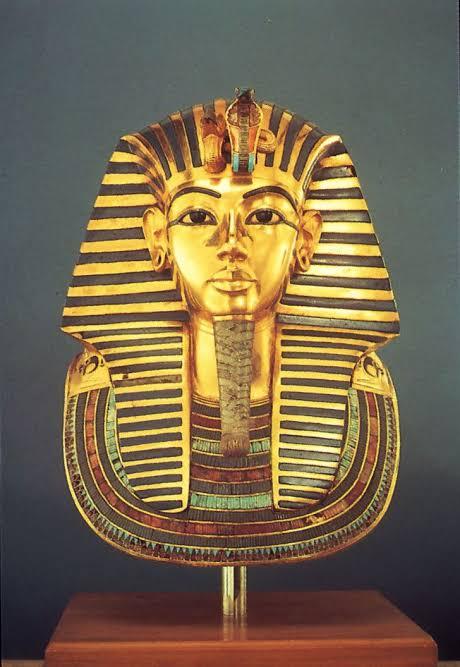
The golden mask placed over Tutankhamun’s mummy became the best-known object associated with him. Decorated with precious materials and royal symbols, it was designed to identify the king and protect his identity in the afterlife.
The mask’s image is now widely associated with ancient Egyptian art, appearing in museums, books and educational materials around the world.
The Nested Coffins and Sarcophagus
Tutankhamun’s mummy was placed inside a series of coffins, including an innermost coffin made of solid gold. These were enclosed within a stone sarcophagus and a set of gilded wooden shrines.
The layered burial arrangements reflected Egyptian beliefs about protecting the deceased and preparing the king for existence beyond death.
Furniture and Personal Possessions
The tomb held chairs, beds, chests, clothing, sandals, cosmetic containers, jewellery and other everyday objects. These items show that royal burials included practical possessions as well as ceremonial equipment.
Some objects were beautifully decorated, while others reveal details of the materials and techniques used by ancient Egyptian craftsmen.
Chariots and Weapons
Several chariots and weapons were also found in the tomb. Their presence offers evidence of the equipment associated with royal status, hunting, transport and warfare.
The objects should not all be interpreted as proof of Tutankhamun’s personal military activity. Many were placed in the tomb as part of the equipment expected to accompany a king into the afterlife.
The Iron Dagger
One particularly interesting object was an iron dagger found with Tutankhamun’s burial goods. Scientific analysis published in 2016 indicated that its blade was made from iron originating in a meteorite.
The discovery showed that ancient Egyptian craftspeople could work with meteoritic iron before iron production became widespread. It also demonstrates how modern scientific testing can reveal the origins of objects that were made more than three thousand years ago.
Together, the tomb’s contents provide an unusually detailed record of royal life, religious beliefs and craftsmanship during the Eighteenth Dynasty.
10. The Curse of Tutankhamun’s Tomb
The story of Tutankhamun’s tomb became surrounded by rumours of a curse after the discovery attracted international attention.
Interest grew further when Lord Carnarvon died in April 1923, several months after the tomb’s discovery. Newspapers and popular accounts connected his death with the burial site, helping spread the idea that disturbing the pharaoh’s resting place had brought supernatural punishment.
The story became more elaborate over time, with later accounts linking other deaths and misfortunes to the supposed curse. However, there is no reliable evidence that a supernatural curse caused these events.
The fascination was strengthened by the tomb’s sealed chambers, ancient religious symbols and the public’s interest in mummies. The idea became a popular theme in books, films and other entertainment.
The real archaeological work was less mysterious but far more demanding. The tomb contained fragile materials that required careful handling, and the excavation involved years of documentation and conservation.
The so-called curse is best understood as part of the modern legend surrounding the discovery, rather than an established fact about Tutankhamun or ancient Egyptian religion.
11. Why Was Tutankhamun Almost Forgotten?
Despite the treasures in his tomb, Tutankhamun was not remembered in the same way as some of Egypt’s longer-reigning pharaohs during the centuries after his death.
Later rulers attempted to distance themselves from the Amarna period. King lists and monuments created under subsequent pharaohs omitted Tutankhamun and other rulers associated with Akhenaten’s religious changes.
Some of Tutankhamun’s monuments and inscriptions were altered or reused by later kings. The process made it harder for future generations to reconstruct his reign from public records alone.
His relatively short time on the throne also meant that he left fewer monumental achievements than pharaohs who ruled for decades. Without a well-known historical narrative, his name did not remain prominent in later accounts of Egyptian kingship.
Ironically, the burial that helped preserve his material possessions also allowed modern archaeologists to recover evidence of his life. His tomb survived beneath debris and later construction activity in the Valley of the Kings, helping protect much of its contents.
The 1922 discovery brought his name back into public attention. Objects from the tomb revealed details of royal burial practices and the artistic traditions of the period, while inscriptions helped historians understand the religious changes that took place during his reign.
12. Tutankhamun’s Legacy in Modern History
Tutankhamun’s importance today extends beyond the fame of his golden mask. His tomb remains a major source of evidence about ancient Egyptian religion, art, royal possessions and funerary practices.
The collection helped scholars study the objects that accompanied a pharaoh into the afterlife. Because so many items survived together, researchers could examine how furniture, jewellery, coffins, shrines and ritual objects formed part of a royal burial.
His reign also provides a valuable historical record of Egypt’s return to traditional religious institutions after Akhenaten’s changes. The Restoration Stela and other inscriptions preserve evidence of how the government presented that transition.
The discovery also changed public interest in Egyptology. Photographs of the excavation, exhibitions of the treasures and subsequent research brought ancient Egyptian history to a much wider audience.
Tutankhamun’s fame has continued through museum displays, books, documentaries and archaeological studies. New examination techniques, including DNA analysis and medical imaging, have helped researchers investigate questions about his family and health that could not be answered in Carter’s time.
Yet important uncertainties remain. Historians do not know every detail of Tutankhamun’s childhood, the full extent of his personal role in government or the exact cause of his death. His story is a reminder that archaeological evidence can reveal remarkable information while leaving some questions unanswered.
13. Interesting Facts About King Tutankhamun
He became king as a child. Tutankhamun was approximately eight or nine years old when he ascended the throne.
His name changed. He was originally called Tutankhaten before adopting the name Tutankhamun as traditional religious practices returned.
His tomb was discovered in 1922. Howard Carter led the excavation in the Valley of the Kings.
His burial contained thousands of objects. The collection included furniture, jewellery, clothing, chariots and elaborate funerary equipment.
His famous mask was part of his burial. The golden funerary mask covered his mummy and has become an internationally recognised image of ancient Egypt.
He died before reaching adulthood by modern standards. Researchers generally place his age at death around 18 or 19.
His family relationships were investigated through DNA research. A 2010 study identified likely parents among royal mummies, although some identities remain uncertain.
His tomb was not completely untouched. Evidence indicates that ancient intruders entered it, but much of the burial collection survived.
An iron dagger in his tomb came from a meteorite. Scientific analysis identified meteoritic material in its blade.
The curse story is not established history. The supernatural claims grew mainly from modern media coverage after the tomb’s discovery.
14. Frequently Asked Questions About King Tutankhamun
1. Who was King Tutankhamun?
King Tutankhamun was a pharaoh of Egypt’s Eighteenth Dynasty who ruled during the fourteenth century BC. He is best known for restoring traditional religious practices and for the discovery of his tomb in 1922.
2. How old was Tutankhamun when he became king?
He was approximately eight or nine years old when he became pharaoh.
3. How old was King Tut when he died?
He was about 18 or 19 years old. The exact age is estimated from examinations of his mummy and the historical evidence.
4. Who discovered Tutankhamun’s tomb?
Howard Carter led the excavation that uncovered the tomb on 4 November 1922. His team, local Egyptian workers and other specialists played important roles in the discovery and preservation of its contents.
5. Where was Tutankhamun buried?
He was buried in tomb KV62 in the Valley of the Kings, near modern Luxor in southern Egypt.
6. Who were Tutankhamun’s parents?
Scientific research has identified his father as Akhenaten and his mother as a royal woman whose personal name remains unknown. The maternal identification is based on genetic analysis of royal mummies.
7. Was King Tut murdered?
There is no conclusive evidence that Tutankhamun was murdered. Researchers have investigated possible injuries and illnesses, but his precise cause of death remains uncertain.
8. Did Tutankhamun have children?
Two mummified female foetuses were discovered in his tomb and have been associated with the royal couple. Neither survived to become an heir.
9. What was found inside Tutankhamun’s tomb?
The tomb contained thousands of objects, including his golden funerary mask, coffins, gilded shrines, furniture, jewellery, clothing, chariots and ritual items.
10. Was there really a curse on Tutankhamun’s tomb?
No reliable evidence establishes that a supernatural curse existed or caused the deaths associated with the excavation. The curse became a popular story after the tomb’s discovery.
Conclusion
King Tutankhamun’s place in history comes from both the events of his short reign and the extraordinary survival of his burial collection. As a young pharaoh, he presided over the restoration of traditional Egyptian religious institutions after the changes associated with Akhenaten.
His death left questions about succession, family and health that researchers continue to investigate. The discovery of his tomb in 1922 supplied evidence that could not have been recovered from written records alone, from royal craftsmanship to the objects used in burial rituals.
More than three thousand years after his death, Tutankhamun remains a central figure in the study of ancient Egypt. His tomb is not simply a collection of gold and precious objects. It is a rare historical record of a young king, his world and the beliefs that shaped Egyptian royal life.