|
Getting your Trinity Audio player ready... |
Oba Ewuare the Great
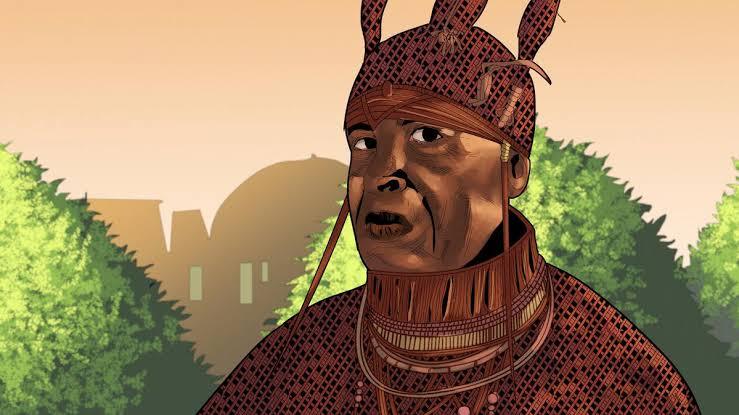
Oba Ewuare the Great was one of the most influential rulers in the history of the ancient Kingdom of Benin, located in what is now Edo State, southern Nigeria. He ruled from approximately 1440 to 1473 and is remembered for rebuilding Benin City, strengthening royal authority, expanding the kingdom’s territory and developing institutions that shaped Benin political life for generations.
His reign marked a major period of change in the kingdom’s administration, urban development, royal ceremonies and artistic traditions. Benin became increasingly organised around the authority of the Oba, while its craftsmen continued to produce works in brass, ivory and wood that would later gain international recognition.
Ewuare’s life is also surrounded by Edo oral traditions, including accounts of exile, a struggle for the throne and the rebuilding of the capital. Because written records from his lifetime are limited, these stories need to be considered alongside archaeological evidence and later historical research.
Oba Ewuare the Great Biography at a Glance
Name: Oba Ewuare I, also known as Ewuare the Great
Birth name: Commonly given in historical accounts as Prince Ogun
Birth period: Early fifteenth century, with an exact date unknown
Kingdom: Kingdom of Benin
Reign: Approximately 1440 to 1473
Capital: Benin City, in present-day Edo State, Nigeria
Royal house: The Eweka dynasty
Father: Traditionally identified as Oba Ohen
Predecessor: Oba Uwaifiokun, according to commonly cited king lists
Successor: Accounts of the succession differ, with Ezoti and Olua appearing in historical king lists
Known for: Rebuilding Benin City, political reforms, territorial expansion, royal traditions and support for the arts
Historical period: Fifteenth-century West Africa
The dates and some details of Ewuare’s family and succession come from traditional king lists and later accounts. Historians caution that the chronology of early Benin rulers cannot always be independently confirmed.
Early Life and Family Background
Oba Ewuare lived during a period when the Kingdom of Benin was developing into a major political power in West Africa. Its population was predominantly Edo-speaking, and its political centre was the city now known as Benin City.
Traditional accounts identify Ewuare’s birth name as Ogun and describe him as a son of Oba Ohen. Details about his childhood, including his exact birth date and early education, are not securely established by contemporary documents.
According to Edo oral tradition, Ogun experienced political difficulties within the royal family and spent part of his early life away from the capital. His relationship with his brother Uwaifiokun became central to stories about how he eventually claimed the throne.
These accounts are important to the cultural memory of the Benin monarchy, but they should not all be treated as independently verified events. Much of what is known about Ewuare comes from oral histories recorded later, royal traditions and historical reconstructions rather than documents produced during his lifetime.
What is clearer is the significance of his reign. The period associated with Ewuare saw major changes in the political organisation and physical development of Benin, helping prepare the kingdom for further expansion under later Obas.
How Oba Ewuare the Great Became King
One of the best-known stories about Ewuare concerns his struggle to gain the throne. According to Edo oral tradition, he was originally called Ogun and lived through a period of conflict within the royal family. His brother Uwaifiokun is said to have taken the throne before Ogun returned to challenge his rule.
The traditional account describes a violent struggle that ended with Ogun becoming king around 1440. After his accession, he took the name Ewuare, commonly interpreted in Edo tradition as a name associated with the end of trouble or the restoration of peace.
Some versions of the story say that the conflict caused extensive destruction in the capital. Ewuare is then credited with rebuilding the city and reorganising its political institutions.
Although the broad story is central to accounts of his rise, the details vary between traditions. Historians therefore distinguish the remembered narrative of his accession from events that can be independently confirmed.
His rise to power nevertheless marks an important turning point in Benin’s historical memory. Ewuare is associated with a stronger central monarchy and a more extensive system of administration than the kingdom had previously possessed.
Rebuilding Benin City

One of Ewuare’s most important achievements was the rebuilding and expansion of Benin City. Traditional accounts associate his reign with the improvement of the royal palace, the development of major streets and the construction or enlargement of defensive earthworks.
The city was not simply a royal residence. It was a centre of government, religious ceremonies, specialised craftsmanship and trade. Improving its layout helped organise the activities of the royal court and the wider population.
Ewuare is particularly associated with the great earthen walls and ditches of Benin. These structures formed part of a much larger network of earthworks built and extended over different periods. They helped mark boundaries and protect settlements, although it would be inaccurate to attribute the entire network to one king.
The scale of Benin’s earthworks demonstrates the ability of its rulers to mobilise substantial labour and coordinate major construction projects. Archaeological research has helped establish the importance of these structures in the development of the region.
Benin City continued to grow under later rulers. The capital’s urban organisation and defensive features became part of the kingdom’s reputation among visitors from outside the region.
Political Reforms and the Power of the Oba
Ewuare is credited with reorganising the political institutions of Benin and strengthening the authority of the monarch.
The kingdom had established traditions involving hereditary chiefs, palace officials, elders and other groups that participated in government. Ewuare’s reforms are associated with a clearer division of administrative responsibilities and greater authority for officials appointed to serve the Oba.
This development helped the monarchy manage a larger territory and a more complex capital. Royal officials could carry out duties connected with the palace, local administration, ceremonies and the organisation of public affairs.
Ewuare is also associated with changes to royal succession. Historical accounts link his reign with the development of a system in which the eldest son of the Oba was expected to inherit the throne. Later Benin history shows that succession did not always follow a simple or uninterrupted pattern, but the principle became important in the monarchy’s traditions.
These changes did not create every Benin institution from nothing. Rather, they formed part of a longer process in which the kingdom’s political system developed over generations.
Military Campaigns and Territorial Expansion
Ewuare is remembered as a ruler who expanded Benin’s influence through military campaigns. Traditional accounts credit him with bringing neighbouring communities under the kingdom’s authority and extending its reach beyond the immediate area around the capital.
Territorial expansion helped increase the political and economic importance of the monarchy. Communities linked to Benin could provide tribute, goods or other forms of support, while the royal government gained greater influence over regional affairs.
The exact extent of Ewuare’s conquests is difficult to reconstruct. Later accounts sometimes attribute numerous victories to him, but specific campaign details and boundaries are not always independently verifiable.
It is therefore more accurate to describe his reign as an important phase in the expansion of Benin’s regional power rather than assign precise borders to every territory said to have come under his control.
His successors continued military and political expansion. The strength of Benin in later centuries was the result of several generations of rulers, officials, soldiers, traders and craftspeople building on institutions developed during earlier reigns.
Ewuare the Great and Benin’s Royal Traditions
Ewuare’s reign is associated with the development and organisation of royal ceremonies that helped define the relationship between the Oba, the court and the wider community.
Royal rituals were not merely celebrations. They formed part of the kingdom’s political and religious life, reinforcing the position of the monarch and connecting the royal household with beliefs about the ancestors, spiritual protection and the wellbeing of the state.
The annual Igue festival is associated in Benin tradition with the royal court and the protection and renewal of the kingdom. Its history developed over time, and accounts of its origins should be understood within the broader evolution of Benin’s religious and ceremonial practices.
Ewuare is also linked in oral tradition with the Ugie Ewere ceremony. Traditions surrounding this observance connect it with the history of the royal household and the cultural memory of the reign.
The precise origins of particular ceremonies can be difficult to establish from surviving evidence. Nevertheless, Ewuare’s name remains closely associated with the development of the royal ritual system.
Coral Beads, Royal Clothing and the Arts
The Benin royal court became known for its elaborate regalia, including coral beads, richly decorated clothing and ceremonial objects. Ewuare is traditionally associated with the promotion of coral-bead regalia and red cloth as important symbols of royal authority.
Coral beads acquired a prominent place in the visual language of the Benin monarchy. They appeared in royal clothing and ornaments, communicating status and connection to the court. Red cloth likewise became associated with royal display and ceremonial identity.
The kingdom’s artistic traditions were already developing before Ewuare, but his reign is credited with encouraging the work of specialised craftspeople. Benin’s artists produced carved ivory, wooden objects and metalwork for the palace and religious settings.
These objects were not simply decorations. They could preserve court history, honour ancestors, represent political relationships and communicate the authority of the Oba.
The famous Benin brass and bronze works admired in museums today were produced across many generations. Ewuare’s reign belongs to the early history of the political and artistic system that supported this tradition, rather than representing the work of a single ruler or period alone.
Trade and Contact with Europeans
Ewuare’s reign fell within a period when West African societies were connected to regional and long-distance trading networks. Benin participated in exchanges involving agricultural products, crafts, metal goods and other commodities.
European contact became increasingly important later in the fifteenth century. Portuguese expeditions reached the Benin coast in the 1480s, after the commonly accepted end of Ewuare’s reign. For that reason, claims that he personally met Portuguese explorers should be treated cautiously.
Trade with Europeans expanded under subsequent Obas. Imported materials, including copper alloys and other luxury goods, became important to the court and to Benin’s artistic production.
Benin’s relationship with overseas traders developed gradually. The kingdom already had political institutions, specialised industries and regional commercial connections before European merchants arrived. European contact became one part of a much longer history of Benin’s development.
Oba Ewuare the Great’s Family and Succession
Details about Ewuare’s private life are less certain than the major developments associated with his reign. Traditional accounts identify him as a member of the royal family descended from earlier Obas, but information about his wives and children varies across historical narratives.
The succession after his death is also described differently in king lists and later accounts. Ezoti and Olua appear in commonly cited versions, and the order and chronology of the early rulers are subjects of historical discussion.
The uncertainty reflects the challenges historians face when reconstructing periods for which contemporary written records are limited. Oral tradition remains important, but it must be compared with other evidence wherever possible.
The political system associated with Ewuare continued to influence later generations. Subsequent rulers expanded Benin’s territory, developed its court institutions and maintained its artistic traditions, making the kingdom one of the most prominent states in the region.
The Legacy of Oba Ewuare the Great
Oba Ewuare the Great is remembered as a major figure in the history of the Edo people and the Kingdom of Benin. His significance rests on several connected developments.
Urban development: He is credited with rebuilding Benin City and improving its streets, palace area and defensive structures.
Political organisation: His reign is associated with stronger royal authority and a more organised system of administration.
Territorial expansion: He is remembered for extending Benin’s regional influence through military campaigns.
Royal traditions: He is linked with ceremonies and symbols that became important to the Benin monarchy.
Artistic development: His reign is associated with the court environment that supported the work of Benin’s skilled craftspeople.
Historical memory: Stories about his rise to power and reforms remain part of the traditions through which the Edo community remembers its past.
His legacy should also be viewed within the wider history of Benin. The kingdom’s achievements were not the work of one monarch alone. They depended on the skills of its craftspeople, the labour of its population, the work of officials and the contributions of rulers who came before and after him.
Even so, Ewuare’s reign is widely treated as a major stage in the transformation of Benin into a powerful and highly organised kingdom.
Conclusion
Oba Ewuare the Great ruled Benin during the fifteenth century, a period associated with major changes in the kingdom’s political structure, urban development and royal traditions. His reign is remembered for the rebuilding of Benin City, the strengthening of the monarchy, territorial expansion and support for the court culture that helped Benin become renowned for its artistic achievements.
Some details of his life remain uncertain because much of the surviving account comes from oral traditions and later historical records. That uncertainty does not erase his importance. It instead highlights the need to study Benin’s history with respect for Edo historical memory and careful attention to the available evidence.
Ewuare remains one of the most significant rulers in the history of the ancient Kingdom of Benin, and his name continues to feature prominently in accounts of the kingdom’s growth and cultural heritage.
Frequently Asked Questions About Oba Ewuare the Great
1. Who was Oba Ewuare the Great?
Oba Ewuare the Great was a fifteenth-century ruler of the Kingdom of Benin in what is now Edo State, Nigeria. He is remembered for rebuilding Benin City, strengthening the monarchy and expanding the kingdom’s influence.
2. When did Oba Ewuare the Great rule Benin?
His reign is commonly dated to approximately 1440 to 1473, although the chronology of early Benin rulers is not fully certain.
3. What was Oba Ewuare’s birth name?
Traditional accounts commonly identify his birth name as Ogun. He is said to have adopted the name Ewuare after becoming king.
4. Who was Oba Ewuare the Great’s father?
Traditional Benin accounts identify his father as Oba Ohen. Details of early royal genealogies are drawn largely from king lists and oral traditions.
5. What were Oba Ewuare the Great’s major achievements?
His main achievements are associated with rebuilding Benin City, strengthening royal administration, expanding the kingdom’s territory and developing royal ceremonies and court traditions.
6. Did Oba Ewuare build the Benin Walls?
He is traditionally credited with building or enlarging important walls and ditches around Benin City. However, the wider network of Benin earthworks developed over different periods, so it is not accurate to attribute all of it to him alone.
7. Was Oba Ewuare the Great involved in the development of Benin art?
Yes. His reign is associated with the royal patronage and court institutions that supported Benin’s traditions of brass casting, ivory carving and wood carving. These art forms developed across many generations.
8. Did Oba Ewuare the Great meet the Portuguese?
There is no firm evidence that Portuguese explorers met him personally. The first well-known Portuguese expeditions to the Benin coast occurred in the 1480s, after the commonly accepted end of his reign.
9. Why is Oba Ewuare called “the Great”?
The title reflects his lasting reputation in Benin historical tradition as a ruler associated with political reforms, urban rebuilding, territorial expansion and the development of royal culture.
10. What is Oba Ewuare the Great’s legacy today?
He remains an important figure in Edo history and the cultural heritage of Benin City. His reign is remembered as a formative period in the development of the kingdom’s political institutions, royal traditions and artistic culture.